Ashwagandha for women in HormoneFlux: the calm-and-stress guide

Updated September 2026 · reviewed by the HormoneFlux Research Team. We are an independent information resource, not a medical provider, and this article is educational rather than medical advice.
Ashwagandha for women is the use of Withania somnifera, a storied Ayurvedic adaptogen, to help the body meet everyday stress with a little more steadiness and calm. It is not a hormone drug and not a cure for anything — it is a traditional botanical, now studied in modern trials, that many women take to feel more even through busy days and hormonal transitions. In HormoneFlux it sits alongside black cohosh, chasteberry and other women’s botanicals as the “stress resilience” piece of a daily routine.
Ashwagandha for women, in one honest paragraph.
- What it is
- An adaptogenic root (Withania somnifera) used in Ayurveda for centuries and now studied as a support for stress and sleep quality.
- What it does
- It is best understood as supporting the body’s stress response and everyday calm — not as directly balancing reproductive hormones.
- The evidence
- Small trials link standardised extracts to lower self-rated stress and lower cortisol readings; the research is promising but still modest.
- Typical dose
- Studies most often use about 300–600 mg of standardised root extract daily; check the HormoneFlux panel for the exact amount.
- Who should wait
- Avoid in pregnancy and breastfeeding; anyone with a thyroid or autoimmune condition, or on medication, should ask a doctor first.
If your energy, mood and patience seem to rise and fall with both your monthly cycle and the general noise of life, you are not imagining it — stress and hormones are deeply intertwined. Ashwagandha has become one of the most-searched botanicals in women’s wellness precisely because it targets that overlap: the way chronic stress can make an already shifting hormonal landscape feel harder to manage. This guide explains what the herb actually is, what the science does and does not show, how it is used, and where a formula like HormoneFlux fits in.
What is ashwagandha, and why do women take it?
Ashwagandha is an evergreen shrub, Withania somnifera, whose root has been used in Ayurvedic medicine for more than two thousand years as a rasayana — a traditional rejuvenating tonic. The name loosely translates as “smell of the horse,” a nod to its earthy aroma and the old idea that it lends the strength and vigour of a horse. In modern language, it is classified as an adaptogen: a plant thought to help the body adapt to stress and return more easily to its own baseline. The trial itself is Gopal S et al., Effect of an ashwagandha (Withania Somnifera) root extract on climacteric symptoms in women during perimenopause: A randomized, double-blind, placebo-controlled study, Journal of Obstetrics and Gynaecology Research (2021).
Women take ashwagandha mainly for what it may offer around stress rather than for any direct hormonal action. In everyday terms, the appeal is a calmer, steadier feeling through demanding days, and for some, easier, more restful sleep. Because chronic stress can amplify the discomforts women already notice across the cycle and the perimenopause years, an adaptogen that eases the stress load can feel like it is helping the whole picture — even though it is working on the stress system, not the ovaries.
How does ashwagandha work in the body?
Ashwagandha appears to act mainly on the body’s stress-response system, the hypothalamic–pituitary–adrenal (HPA) axis, which governs the hormone cortisol. When life stays stressful, cortisol can stay elevated, and because hormones talk to one another, a persistently high cortisol signal can ripple across the wider system. The compounds in ashwagandha root — a group of steroidal lactones called withanolides — are the parts researchers usually study, and standardised extracts are measured by their withanolide content. The same reasoning runs through our explainer on maca vs ashwagandha for women. That literature is reviewed in Dietz BM et al., Botanicals and Their Bioactive Phytochemicals for Women's Health, Pharmacological Reviews (2016).
The most consistent finding across small human trials is that standardised ashwagandha extracts are associated with lower self-reported stress and, in several studies, lower measured cortisol compared with placebo. That is a meaningful and plausible mechanism, but two honest caveats belong here: the trials are generally small and short, and “supports the stress response” is not the same as “balances hormones.” Ashwagandha is a support for how you cope, not a lever that resets reproductive hormones on demand.
What does the research on ashwagandha stress relief show?
The research on ashwagandha and stress is genuinely encouraging but still early-stage. Several randomised, placebo-controlled trials of standardised root extracts (commonly 300–600 mg per day for eight to twelve weeks) have reported reductions in perceived-stress scores and in cortisol, along with improvements in some measures of sleep quality. Reviews by independent evaluators such as Examine.com rate the stress and anxiety evidence as among ashwagandha’s stronger areas, while noting the studies are small and some are industry-funded. The trial itself is Salve J et al., Adaptogenic and Anxiolytic Effects of Ashwagandha Root Extract in Healthy Adults: A Double-blind, Randomized, Placebo-controlled Clinical Study, Cureus (2019).
What the evidence does not establish is that ashwagandha treats any diagnosed hormonal condition, resolves menopausal changes, or replaces medical care. The honest summary is this: for everyday stress and sleep, ashwagandha has a reasonable and growing body of supportive evidence; for direct effects on women’s reproductive hormones, the picture is far thinner and should be treated with caution. That is why HormoneFlux positions ashwagandha as the calm-and-resilience ingredient in a broader blend, not as a stand-alone fix. Readers weighing this up usually find our guide to adaptogens for women’s hormones useful next.
| What people hope for | What the evidence suggests | Strength of evidence |
|---|---|---|
| Lower everyday stress | Standardised extracts linked to lower perceived-stress scores vs placebo | Moderate — several small RCTs |
| Lower cortisol | Some trials show reduced morning/serum cortisol | Emerging — small studies |
| Better sleep quality | Improvements in sleep measures in a few trials | Emerging |
| “Balancing” reproductive hormones | Little direct evidence; not a hormone therapy | Weak / insufficient |
| Treating a medical condition | Not supported; not a drug | Not a claim we make |

See the exact dose in HormoneFlux
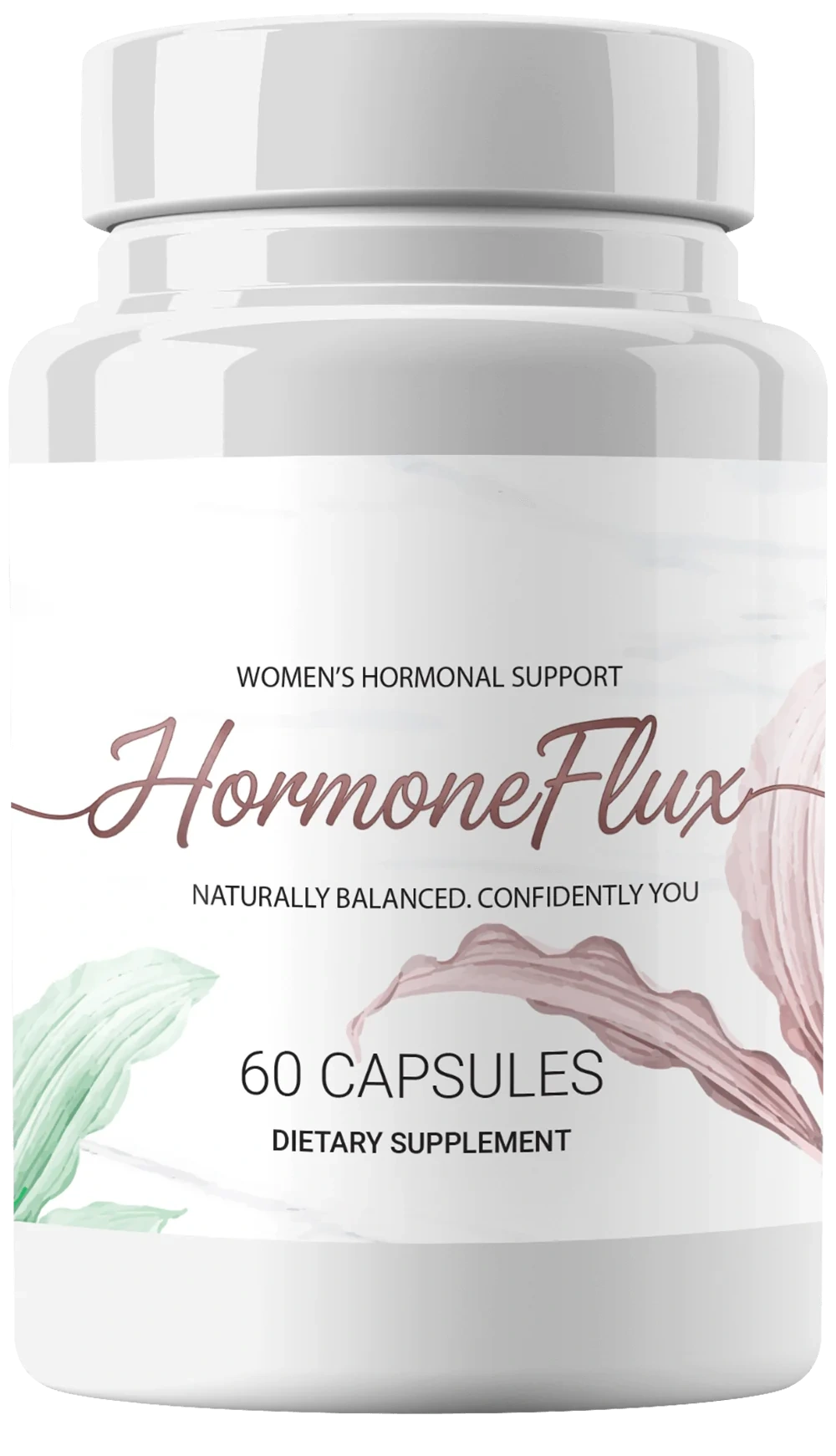
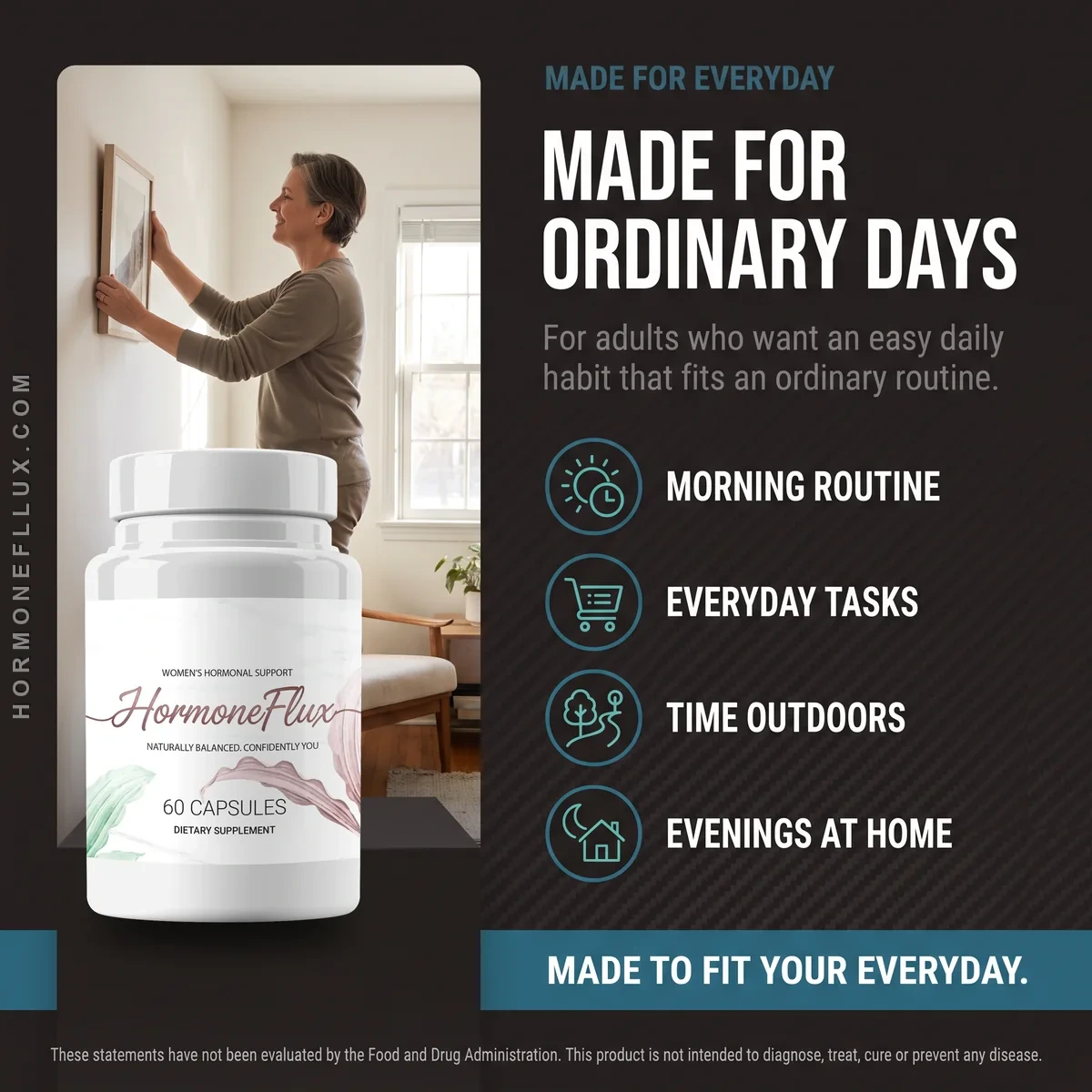
HormoneFlux is a once-daily capsule that pairs ashwagandha with black cohosh, chasteberry and other women’s botanicals. The six-bottle bundle is the best value, with free U.S. shipping and a 90-day guarantee.
Check today’s HormoneFlux pricing →How much ashwagandha for women, and how is it taken?
A practical ashwagandha dose for women is usually a standardised root extract in the region of 300 to 600 mg per day, often taken once in the morning or split across morning and evening. Because commercial extracts differ in how concentrated they are — measured by their withanolide percentage — the milligram figure alone does not tell the whole story, which is why standardisation matters more than a big raw number. In a multi-botanical formula, ashwagandha is one component of a daily serving rather than a mega-dose on its own.
Consistency tends to matter more than timing. Many women take an adaptogen with a meal to settle the stomach, and some prefer an evening dose if they are using it partly for wind-down. Whatever the routine, the sensible approach is to take it at the same time each day and give it a fair trial — typically eight to twelve weeks — alongside the sleep, movement and nutrition habits that do the heavy lifting. For the precise amount per serving in this product, always read the supplement facts panel on the label.
| Question | Practical guidance |
|---|---|
| Common daily range | ~300–600 mg standardised root extract |
| When to take it | Same time daily, with food; evening if used for wind-down |
| How long to trial it | About 8–12 weeks, taken consistently |
| What to look for on a label | Standardised to withanolides; clear per-serving amount |
| Best paired with | Good sleep, regular movement, whole-food meals |
Is ashwagandha safe for women? Who should be careful?
Ashwagandha is generally well tolerated by healthy adults over the short to medium term, but “natural” does not mean “right for everyone.” Reported side effects are usually mild — some people notice drowsiness or a little digestive upset — but there are specific situations where it should be avoided or discussed with a doctor first. Being clear about these is part of using any botanical responsibly.
Speak to a healthcare professional before using ashwagandha if you:
- are pregnant or breastfeeding — it is traditionally avoided in pregnancy;
- have a thyroid condition, as ashwagandha may influence thyroid hormone levels;
- have an autoimmune condition such as lupus, rheumatoid arthritis or Hashimoto’s;
- take medication — including sedatives, thyroid medicine, or immune-modulating drugs;
- have liver concerns, since rare reports of liver issues have been described;
- are scheduled for surgery — adaptogens with sedative effects may need pausing.
None of this is meant to alarm you; most healthy women use ashwagandha without trouble. It is simply the honest checklist that any good ingredient guide should include, and it is the reason we say a quick word with your own doctor is the right first step. It is a point we return to when looking at phytoestrogens vs adaptogens.

How does ashwagandha fit with the other botanicals in HormoneFlux?
In HormoneFlux, ashwagandha plays the role of the stress-and-calm adaptogen within a wider blend built for women’s everyday wellness. Where black cohosh and red clover are traditionally associated with menopausal comfort, and chasteberry with monthly balance, ashwagandha and maca sit on the vitality-and-resilience side of the formula. The idea is not that any single herb does everything, but that a thoughtfully combined daily capsule covers several traditional bases in one step.
For the full line-up and the reasoning behind it, see the HormoneFlux ingredients section, or read our companion guides on black cohosh and chasteberry for menopause and how to support hormone balance naturally. Together they show how the adaptogen described here fits into a broader, habit-first approach.
See the exact ashwagandha dose in HormoneFlux →
Frequently asked questions
What is ashwagandha and why is it used for women?
Ashwagandha (Withania somnifera) is an Ayurvedic adaptogen traditionally used to help the body cope with everyday stress and to support a sense of calm and steady energy. In women's wellness it is valued as a support for stress resilience, not as a treatment for any hormonal condition.
Does ashwagandha balance hormones?
Ashwagandha is best described as supporting the body's stress response rather than directly balancing reproductive hormones. Some studies report lower self-rated stress and lower cortisol readings with standardised extracts, but the evidence is modest and it should not be viewed as a hormone therapy.
How much ashwagandha do women usually take?
Studies most often use standardised root extracts in the range of about 300 to 600 mg per day, usually split into one or two doses. HormoneFlux includes ashwagandha as part of a daily botanical blend; check the supplement facts panel for the exact amount per serving.
Is ashwagandha safe for women to take every day?
Ashwagandha is generally well tolerated in the short to medium term, but it is not suitable for everyone. It should be avoided in pregnancy and while breastfeeding, and anyone with a thyroid condition, an autoimmune condition, or who takes medication should speak with a doctor first.
How long does ashwagandha take to work?
Most studies run for eight to twelve weeks, and many women give an adaptogen a similar window taken consistently before judging it. Some people notice a calmer baseline sooner, but results vary and ashwagandha works best alongside good sleep, movement and nutrition.
Can I take ashwagandha with black cohosh or chasteberry?
Adaptogens and women's botanicals are often combined in blends like HormoneFlux, which pairs ashwagandha with black cohosh, chasteberry and other herbs. Combining supplements still warrants a conversation with your doctor, especially if you take medication or have a diagnosed condition.
Try HormoneFlux risk-free for 90 days →
HormoneFlux is a dietary supplement, not a treatment for any medical condition. These statements have not been evaluated by the Food and Drug Administration. This product is not intended to diagnose, treat, cure or prevent any disease. Always consult a qualified healthcare professional about your individual needs.
References & further reading
- National Center for Complementary and Integrative Health (NCCIH). Ashwagandha. nccih.nih.gov/health/ashwagandha
- Examine.com. Ashwagandha (Withania somnifera) — evidence summary. examine.com/supplements/ashwagandha
- Salve J, et al. Adaptogenic and Anxiolytic Effects of Ashwagandha Root Extract in Healthy Adults: A Randomized, Double-blind, Placebo-controlled Clinical Study. Cureus / PubMed. pubmed.ncbi.nlm.nih.gov/32021735
- National Library of Medicine, LiverTox. Ashwagandha (Withania somnifera). ncbi.nlm.nih.gov/books/NBK548536
- Gopal S et al. Effect of an ashwagandha (Withania Somnifera) root extract on climacteric symptoms in women during perimenopause: A randomized, double-blind, placebo-controlled study. Journal of Obstetrics and Gynaecology Research, 2021. pubmed.ncbi.nlm.nih.gov/34553463
- Dietz BM et al. Botanicals and Their Bioactive Phytochemicals for Women's Health. Pharmacological Reviews, 2016. pubmed.ncbi.nlm.nih.gov/27677719
These references describe the ingredient in general terms and do not constitute evidence that any product treats, cures or prevents any condition.
Keep reading: the best foods for hormone balance · how to support hormone balance naturally · back to the HormoneFlux blog · the HormoneFlux review.