Phytoestrogens vs Adaptogens in HormoneFlux: Two Approaches to Hormone Balance

Updated September 2026 · reviewed by the HormoneFlux Research Team. We are an independent information resource, not a medical provider, and this article is educational rather than medical advice.
Phytoestrogens vs adaptogens is a comparison of two different botanical strategies for hormone balance: phytoestrogens are plant compounds that interact gently with your estrogen receptors, while adaptogens are herbs traditionally used to help the body cope with stress and stay steady. They are not rivals so much as neighbours working on different pathways — which is exactly why HormoneFlux draws on both categories across its eight botanicals rather than betting on one. This guide explains what each approach targets, where the evidence is strong or thin, and how to think about combining them.
Phytoestrogens vs adaptogens, in one honest paragraph.
- The short version
- Phytoestrogens work near the estrogen pathway; adaptogens work near the stress-and-energy pathway — so they complement rather than replace each other.
- Phytoestrogens
- Weak plant estrogens (red clover, soy isoflavones) used for estrogen-linked comfort during menopause.
- Adaptogens
- Stress-adapting herbs (ashwagandha, maca) used for resilience, mood and everyday energy.
- The overlap
- Some botanicals sit between the two, which is why blends like HormoneFlux mix categories rather than pick a side.
- Safety
- Generally well tolerated together; anyone pregnant, nursing, medicated or hormone-sensitive should ask a doctor first.
Walk down any supplement aisle and you will see two very different promises aimed at the same shopper. One shelf talks about “plant estrogens” and menopausal comfort; the next talks about “stress”, “cortisol” and “balance.” It is easy to assume you must choose a camp, and marketing rarely helps you tell them apart. In reality these are two distinct approaches to the same broad goal, each with its own mechanism, its own evidence base, and its own best-fit situations. The aim of this guide is to lay them side by side clearly, to separate the genuine chemistry from the sales copy, and to show why a well-built formula often reaches for both instead of forcing a choice.

What is the difference between phytoestrogens and adaptogens?
The core difference is the pathway each targets: phytoestrogens interact with estrogen receptors, while adaptogens support the body’s stress-response system. Phytoestrogens are structural mimics — plant molecules shaped enough like your own estrogen to sit loosely in the same receptors and buffer the swings of the menopausal transition. Adaptogens, by contrast, are defined by function rather than structure: they are herbs used, in traditional systems and in modern study, to help the body adapt to physical and mental stress. One is about a specific hormone signal; the other is about overall resilience. That literature is reviewed in Dietz BM et al., Botanicals and Their Bioactive Phytochemicals for Women's Health, Pharmacological Reviews (2016).
What are phytoestrogens?
Phytoestrogens are naturally occurring plant compounds — chiefly isoflavones and related molecules — that are weak enough to nudge estrogen activity gently rather than override it. Because they are far less potent than the estrogen your body produces, they tend to have a buffering effect: attaching loosely to receptors, easing activity a little when your own estrogen is low, and mildly competing when it is high. Red clover and soy isoflavones are the classic examples, and black cohosh is often grouped nearby for menopausal use even though its exact mechanism is still debated. This receptor-level subtlety is why phytoestrogens are studied for menopausal comfort but are not hormone therapy.
What are adaptogens?
Adaptogens are herbs traditionally used to help the body maintain equilibrium under stress, working with the stress-hormone axis rather than the estrogen receptor. The term originated in mid-twentieth-century research and describes plants thought to have a normalising, non-specific steadying effect — helping you cope with demands rather than pushing one hormone up or down. Ashwagandha, maca and rhodiola are the best-known women’s adaptogens, valued for stress resilience, mood steadiness and everyday energy. Crucially, an adaptogen is not defined by acting on estrogen at all; its job description is resilience and recovery.
| Dimension | Phytoestrogens | Adaptogens |
|---|---|---|
| Defined by | Molecular structure (estrogen-like) | Function (stress resilience) |
| Main pathway | Estrogen receptors | Stress-hormone / energy axis |
| Typical goal | Estrogen-linked comfort, hot flushes | Mood, energy, coping with stress |
| Classic examples | Red clover, soy isoflavones | Ashwagandha, maca, rhodiola |
| Best framed as | Gentle receptor buffering | Whole-body steadying support |
Which hormone concerns does each approach target?
Each approach maps to a different cluster of concerns, and matching the herb category to the concern is the practical heart of this comparison. Phytoestrogen botanicals are reached for when the complaints track estrogen’s decline — hot flushes, night sweats and the general vasomotor turbulence of perimenopause and menopause. Adaptogens are reached for when the burden is stress-shaped — feeling frazzled, low-energy, tightly wound, or slow to bounce back. Many women experience both at once, which is precisely why the two categories so often appear together on a single label.
It helps to think of it as two overlapping circles rather than opposing teams. If your dominant experience is temperature swings and cycle-related change, the phytoestrogen side of the aisle is the traditional starting point. If your dominant experience is fatigue, tension and feeling stretched thin, the adaptogen side speaks more directly to that. Where the circles overlap — the very common “hot, tired and wired” combination of midlife — a blend that spans both approaches is the most sensible fit, and it keeps you from having to gamble on one narrow bet. It is worth remembering, too, that these categories interact with the rest of your routine: sleep, movement, and steady meals shape how any botanical feels, and no capsule works in isolation from the day around it.
What does the evidence say about phytoestrogens vs adaptogens?
The honest evidence picture is that both categories are promising and traditionally used, but neither is a proven cure, and the research is uneven across specific herbs. For phytoestrogens, reviews of soy and red clover isoflavones suggest a modest, real-but-small effect on hot flushes for some women, with results that vary between studies and individuals. The independent analysts at Examine.com and the U.S. National Center for Complementary and Integrative Health both describe measured, qualified support rather than dramatic effects — useful context to keep expectations grounded. The pooled trial evidence behind that sits in Franco OH et al., Use of Plant-Based Therapies and Menopausal Symptoms: A Systematic Review and Meta-analysis, JAMA (2016).
For adaptogens, the best-studied is ashwagandha, where several trials point to benefits for perceived stress and sleep quality, though sample sizes are often small and study quality varies. Maca and rhodiola have thinner but encouraging traditional-use and early-trial support. In plain terms: both approaches have a genuine basis and both are areas where marketing routinely outruns the data. The responsible reading — and the one HormoneFlux stands behind — is to treat each botanical as gentle, traditionally used support, cite the herbs where evidence is strongest, and never promise a fix.

Want to see how both categories are dosed?
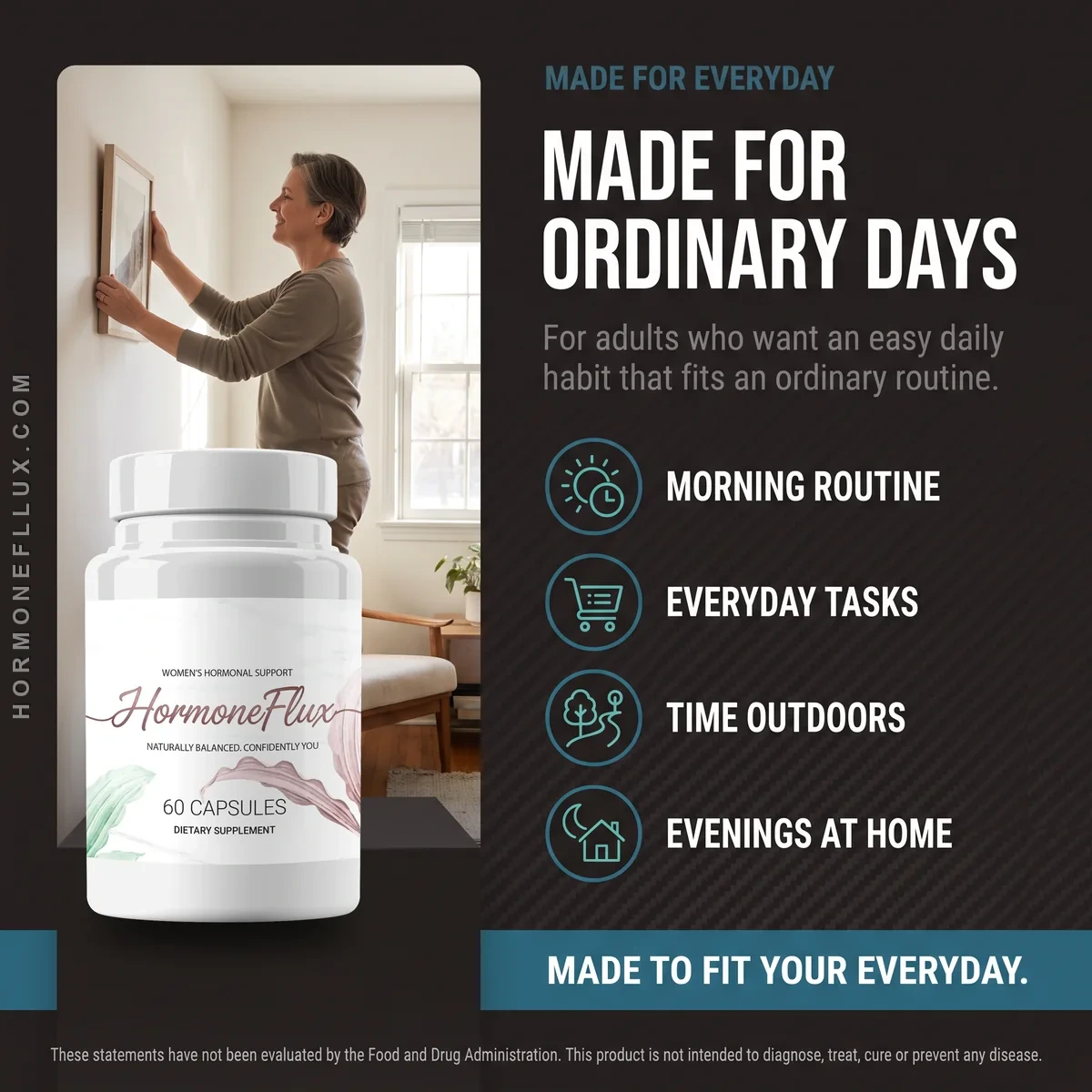
HormoneFlux pairs phytoestrogen botanicals like red clover with adaptogens like ashwagandha and maca in one daily vegetarian capsule, alongside black cohosh, chasteberry and dong quai. The multi-bottle bundles are the best value, with free U.S. shipping and a 90-day guarantee.
See the exact dose in HormoneFlux — from $49/bottleHow do you choose — phytoestrogen or adaptogen herbs?
Choosing between phytoestrogen and adaptogen herbs starts with naming your dominant symptom, then matching it to the pathway that addresses it. If your week is defined by hot flushes and cycle-linked change, phytoestrogens are the traditional match; if it is defined by stress, fatigue and feeling depleted, adaptogens speak more directly. But most people do not fit neatly into one box, and forcing a single-category choice often means leaving half of the experience unaddressed. The table below sorts the common women’s botanicals so you can see where each one lands.
| Botanical | Category | Traditionally reached for |
|---|---|---|
| Red clover | Phytoestrogen | Hot flushes, estrogen-linked comfort |
| Soy isoflavones | Phytoestrogen | Vasomotor comfort in menopause |
| Black cohosh | Grouped with phytoestrogens | Menopausal hot flushes and sweats |
| Ashwagandha | Adaptogen | Stress, sleep, everyday steadiness |
| Maca | Adaptogen | Energy, mood and vitality |
| Dong quai & chasteberry | Neither category neatly | Traditional women’s tonic and cycle support |
Notice that some of the most useful women’s botanicals — dong quai and chasteberry among them — belong to neither camp cleanly. They are valued for their own traditional roles rather than for fitting a tidy label, another reminder that the phytoestrogen-versus-adaptogen split is a useful lens, not a rigid rulebook. For the deeper ingredient context, our full HormoneFlux review walks through the complete panel, and our primer on how to support hormone balance naturally puts the herbs inside a wider routine.
Check today’s HormoneFlux pricing →

Why does HormoneFlux combine both categories?
HormoneFlux combines phytoestrogens and adaptogens because the midlife hormonal transition is rarely one sensation, and covering two pathways is more realistic than betting on one. Rather than a single-herb formula, HormoneFlux surrounds a standardised black cohosh core with red clover on the phytoestrogen side and ashwagandha and maca on the adaptogen side, then rounds the blend out with chasteberry and dong quai from the traditional women’s canon. The intent is coverage across the whole experience — estrogen-linked comfort and stress-and-energy resilience — in a single daily capsule.
This combined design is also the honest answer to each category’s uneven evidence. No single botanical carries a formula, so pairing well-chosen phytoestrogens with well-chosen adaptogens lets each contribute its traditional strength while the blend as a whole aims for steadier day-to-day balance. You can see the complete panel in the HormoneFlux ingredients section, or compare category-by-category with our deep dives on red clover isoflavones and ashwagandha for women’s hormones.
Is it safe to take phytoestrogens and adaptogens together?
For most healthy adults, phytoestrogens and adaptogens are commonly combined in women’s blends and are generally well tolerated together, with any side effects tending to be mild and digestive. The key caution belongs to the phytoestrogen side: because these compounds interact with estrogen receptors, anyone with a hormone-sensitive condition should be careful and speak with a doctor first. Adaptogens carry their own sensible cautions around medication interactions, particularly for thyroid or sedative medicines, so they are not a free pass either. The trial itself is Salve J et al., Adaptogenic and Anxiolytic Effects of Ashwagandha Root Extract in Healthy Adults: A Double-blind, Randomized, Placebo-controlled Clinical Study, Cureus (2019).
The practical frame is straightforward: treat both categories as traditional support rather than treatment, choose a quality standardised product, follow the label, give it eight to twelve weeks, and involve your doctor if you are pregnant or nursing, take prescription medicine, or manage any diagnosed condition. This is general information, not personal medical advice. For a companion read on the estrogen side of the aisle, see our guide to black cohosh for hot flashes.
Frequently asked questions
What is the difference between phytoestrogens and adaptogens?
Phytoestrogens are plant compounds shaped enough like estrogen to interact gently with estrogen receptors, so they are used for symptoms tied to shifting estrogen. Adaptogens are herbs traditionally used to help the body cope with stress and support the stress-hormone axis. In short, phytoestrogens work near the estrogen pathway while adaptogens work near the stress-and-energy pathway, which is why the two categories are often combined rather than chosen one over the other.
Are phytoestrogens or adaptogens better for hormone balance?
Neither is universally better because they target different things. Phytoestrogen herbs such as red clover and soy isoflavones are chosen for estrogen-related comfort, while adaptogens such as ashwagandha and maca are chosen for stress resilience and everyday energy. Many women do best with a thoughtful mix, which is the reasoning behind HormoneFlux combining both categories in one blend. Your own priorities and a doctor's input should guide the choice.
Which herbs are phytoestrogens and which are adaptogens?
Common phytoestrogen botanicals include red clover, soy isoflavones, and black cohosh is often grouped nearby for menopausal use. Classic adaptogens include ashwagandha, maca and rhodiola. Some herbs, like dong quai and chasteberry, do not fit neatly into either box and are valued for their own traditional roles. HormoneFlux draws from across these groups rather than relying on a single category.
Can you take phytoestrogens and adaptogens together?
For most healthy adults the two categories are commonly combined in women's blends and are generally well tolerated together. Because phytoestrogens interact with estrogen receptors, anyone with a hormone-sensitive condition, who is pregnant or nursing, or who takes medication should speak with a doctor before combining them. This is general information, not personal medical advice.
Do phytoestrogens raise your estrogen levels?
Not in the way hormones do. Phytoestrogens are far weaker than the estrogen your body makes, and they attach loosely to estrogen receptors, sometimes nudging activity gently and sometimes competing with stronger estrogen. They do not flood the body with hormones. This subtle, buffering behaviour is why they are studied for gentle menopausal comfort rather than treated as hormone therapy.
Why does HormoneFlux use both phytoestrogens and adaptogens?
HormoneFlux combines both categories because the midlife hormonal transition is not a single sensation. Phytoestrogen botanicals address estrogen-linked comfort while adaptogens support stress and energy, so covering both pathways aims for steadier day-to-day balance than either category alone. That is the logic behind the eight-botanical blend rather than a single-herb bet.
Try HormoneFlux risk-free for 90 days →
HormoneFlux is a dietary supplement, not a treatment for any medical condition. These statements have not been evaluated by the Food and Drug Administration. This product is not intended to diagnose, treat, cure or prevent any disease. Always consult a qualified healthcare professional about your individual needs.
References & further reading
- National Center for Complementary and Integrative Health (NCCIH). Menopausal Symptoms and Complementary Health Approaches. nccih.nih.gov/health/menopausal-symptoms-in-depth
- Examine.com. Soy Isoflavones & Phytoestrogens. examine.com/supplements/soy-isoflavones
- Examine.com. Ashwagandha (Withania somnifera). examine.com/supplements/ashwagandha
- Dietz BM et al. Botanicals and Their Bioactive Phytochemicals for Women's Health. Pharmacological Reviews, 2016. pubmed.ncbi.nlm.nih.gov/27677719
- Franco OH et al. Use of Plant-Based Therapies and Menopausal Symptoms: A Systematic Review and Meta-analysis. JAMA, 2016. pubmed.ncbi.nlm.nih.gov/27327802
- Mayo Clinic. Menopause — Diagnosis & treatment. mayoclinic.org/diseases-conditions/menopause
- Salve J et al. Adaptogenic and Anxiolytic Effects of Ashwagandha Root Extract in Healthy Adults: A Double-blind, Randomized, Placebo-controlled Clinical Study. Cureus, 2019. pubmed.ncbi.nlm.nih.gov/32021735
These references describe the ingredients and their traditional use in general terms and do not constitute evidence that any product treats, cures or prevents any condition.
Keep reading: red clover isoflavones · ashwagandha for women’s hormones · how to support hormone balance naturally · back to the HormoneFlux blog · homepage.