Red clover isoflavones in HormoneFlux, explained

Updated September 2026 · reviewed by the HormoneFlux Research Team. We are an independent information resource, not a medical provider, and this article is educational rather than medical advice.
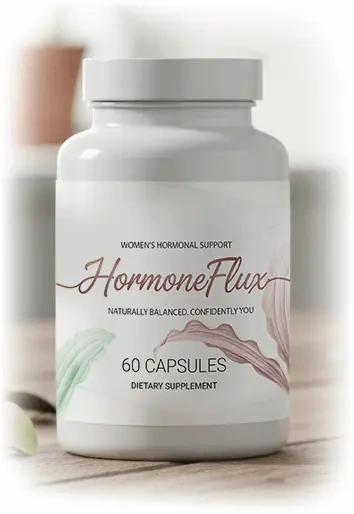
Red clover isoflavones are a group of plant compounds — chiefly biochanin A, formononetin, genistein and daidzein — concentrated in the flowering tops of Trifolium pratense, the wild red clover. Because their molecular shape resembles the body’s own oestrogen, they are classed as phytoestrogens and have been studied for decades in the context of menopausal wellness. In HormoneFlux, red clover sits within a wider blend of traditional women’s botanicals as one recognised source of these isoflavones.
What red clover isoflavones are, and why they matter, in one place.
- What they are
- Isoflavones — a type of phytoestrogen — from the red clover plant, Trifolium pratense.
- Why studied
- Their oestrogen-like shape lets them interact gently with oestrogen receptors, which is why they are researched for menopausal comfort.
- What the evidence shows
- Mixed. Some trials suggest a modest effect on hot flashes; others show little difference from placebo.
- Where they fit
- In HormoneFlux they are one botanical among several, a support to healthy habits rather than a treatment for any condition.
If you have scanned a women’s wellness label and seen “red clover extract” among the botanicals, you have met one of the most studied phytoestrogen sources in the plant world. This guide explains what red clover isoflavones are, why they behave a little like oestrogen, what the research honestly says, and how they fit inside a daily formula like HormoneFlux. Where the evidence is thin, we say so.
What are red clover isoflavones, exactly?
Red clover isoflavones are naturally occurring plant compounds, belonging to the flavonoid family, that are concentrated in the pink-purple flowering heads of the red clover plant. The four that matter most are biochanin A, formononetin, genistein and daidzein. In the plant, biochanin A and formononetin dominate; once inside the body, they can be converted into genistein and daidzein, the same two isoflavones that make soy foods famous. That conversion is part of why red clover and soy are so often discussed side by side.
What sets isoflavones apart from ordinary plant nutrients is their structure: they carry a ring arrangement close enough to the body’s own oestrogen that they can dock, weakly, at the same receptors. That single structural fact underlies almost everything researchers find interesting about them.
What is Trifolium pratense (red clover)?
Trifolium pratense is the botanical name for red clover, a hardy flowering legume native to Europe, Asia and North Africa and now naturalised across much of the world. Used in folk traditions for generations, its flowering tops are today harvested and standardised into extracts prized for a comparatively high isoflavone content.
Two features make it attractive to formulators. First, the isoflavone profile is rich and consistent when standardised. Second, red clover is a food-heritage plant with a long record of traditional use, which is why it recurs in women’s wellness blends rather than appearing as a novelty ingredient.

Why are red clover isoflavones called phytoestrogens?
A phytoestrogen is a plant compound whose shape lets it interact with the body’s oestrogen receptors, and red clover isoflavones are among the best-known examples. The prefix phyto- simply means “plant.” Crucially, a phytoestrogen is not the same as the hormone oestrogen: its effect at the receptor is far weaker, and it can behave differently in different tissues. This is why scientists describe isoflavones as selective and gentle rather than as hormone replacements. We unpack the practical side of that in phytoestrogens for menopause. The pooled trial evidence behind that sits in Lethaby A et al., Phytoestrogens for menopausal vasomotor symptoms, Cochrane Database of Systematic Reviews (2013).
How is that different from taking oestrogen?
The difference is one of strength and precision. Prescription oestrogen is a potent hormone delivered at a therapeutic dose under medical supervision. Dietary isoflavones bind the same receptors far more weakly, which is exactly why they are sold as food-based supplements and studied for gentle support rather than prescribed as medicine. Red clover is a botanical you might add to a healthy routine, not a substitute for hormone therapy your doctor may recommend.
Which isoflavones does red clover contain?
The table below summarises the four principal isoflavones in red clover and how they compare with soy, the other famous dietary source. The point is not that one is superior, but that their profiles differ.
| Isoflavone | Main dietary source | Note |
|---|---|---|
| Biochanin A | Red clover (high) | Converts to genistein in the body. |
| Formononetin | Red clover (high) | Converts to daidzein in the body. |
| Genistein | Soy & red clover | The most-studied isoflavone overall. |
| Daidzein | Soy & red clover | May be further converted to equol in some people. |
See the exact dose in HormoneFlux →
What does the research say about red clover for menopause?
The honest summary is that evidence for red clover isoflavones in menopause is mixed and far from settled. Some randomised trials and reviews report a modest reduction in hot-flash frequency compared with placebo; others find no meaningful difference. Reviews from bodies such as the National Center for Complementary and Integrative Health note that studies vary in quality, dose and duration, and that the overall picture does not amount to proof of effectiveness. A systematic summary of that work is Kanadys W et al., Evaluation of Clinical Meaningfulness of Red Clover (Trifolium pratense L.) Extract to Relieve Hot Flushes and Menopausal Symptoms in Peri- and Post-Menopausal Women: A Systematic Review and Meta-Analysis of Randomized Controlled Trials, Nutrients (2021).
In practice this is straightforward. Red clover is reasonable to try as part of a broader routine, but it is not an established treatment, and no honest formula should promise it will relieve any symptom. Response appears to vary between women, possibly because of differences in gut bacteria that affect how isoflavones are metabolised.
Why are the results so mixed?
Several factors muddy the research: different extracts deliver different isoflavone amounts, trials run for different lengths, and individual metabolism varies. A woman whose gut flora readily converts daidzein into a compound called equol may respond differently from one whose flora does not. Combine small study sizes with these variables, and inconsistent findings are exactly what you would expect.

Red clover, in a daily capsule
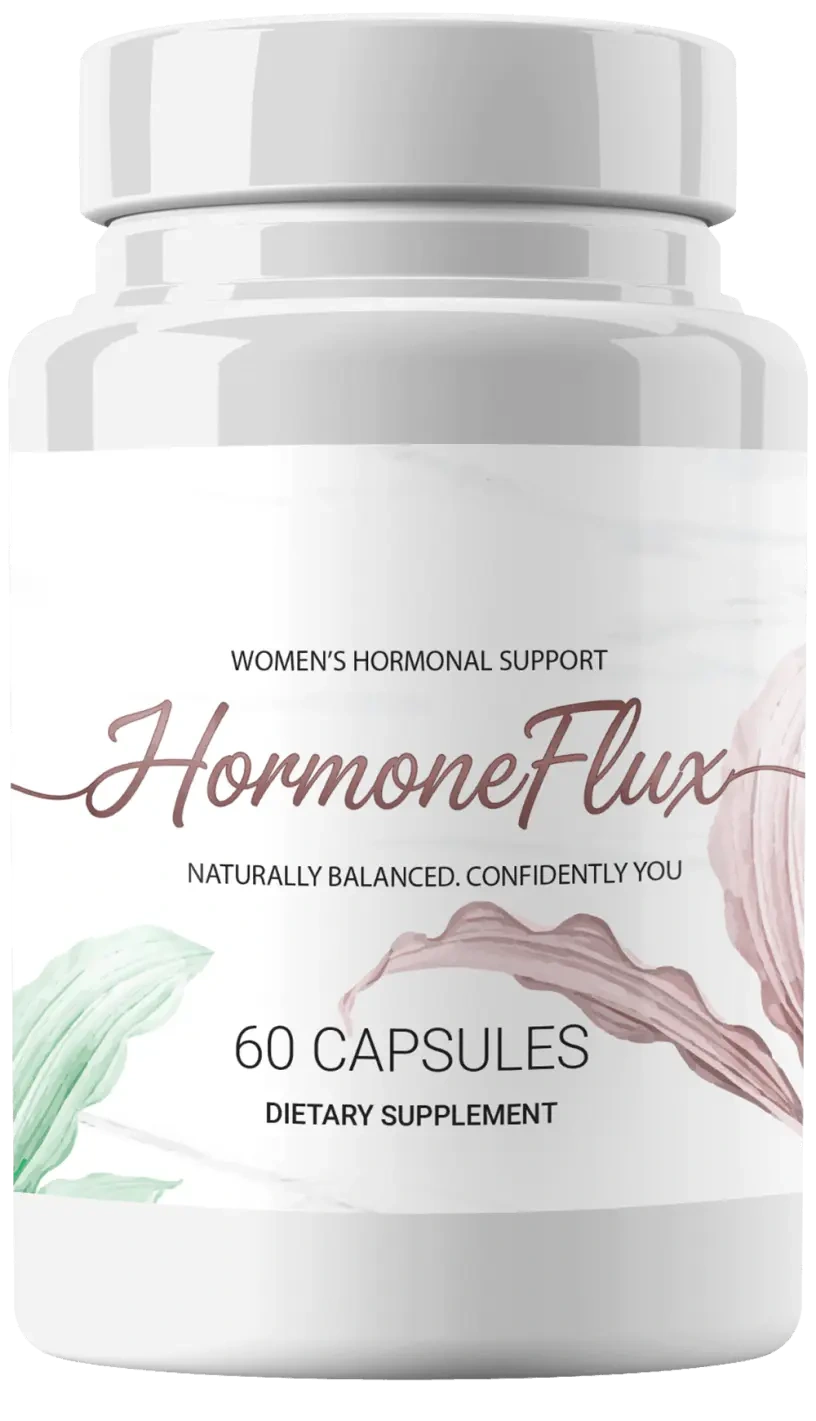
HormoneFlux pairs red clover with black cohosh, chasteberry, dong quai and maca in one once-daily vegetarian capsule. The six-bottle bundle is the best value at $49 per bottle, with free U.S. shipping and a 90-day guarantee.
Check today’s HormoneFlux pricing — from $49/bottleHow much red clover isoflavone is typically used?
Across clinical studies, red clover is most often given as a standardised extract delivering roughly 40 to 80 milligrams of isoflavones per day. That range is a research reference point, not a personal recommendation — the amount inside any given product depends entirely on its own formula and standardisation. The table below shows how the numbers are usually framed. There is a fuller treatment of this in our guide to dong quai for women’s hormones. A systematic summary of that work is Myers SP & Vigar V, Effects of a standardised extract of Trifolium pratense (Promensil) at a dosage of 80mg in the treatment of menopausal hot flushes: A systematic review and meta-analysis, Phytomedicine (2017).
| Detail | Typical figure in studies | What it means |
|---|---|---|
| Daily isoflavone amount | ~40–80 mg | The range most trials have used. |
| Study length | 12 weeks to 12 months | Botanicals are assessed over weeks, not days. |
| Form | Standardised extract | Standardisation keeps the isoflavone content consistent. |
| Time to any effect | Several weeks | If there is a response, it builds gradually. |
Because doses and standardisation differ so widely between products, the only reliable figure is the one printed on the label in front of you. For HormoneFlux, the red clover amount sits within a multi-botanical blend, so the practical guidance is simply to follow the directions and take it consistently.
Is red clover safe, and who should be cautious?
Red clover is generally well tolerated in studies lasting up to about a year, with only mild and occasional side effects such as headache, nausea or rash reported. That said, because its isoflavones act on oestrogen receptors, it is not a “take without thinking” ingredient. Certain groups should check with a healthcare professional before using it at all.
Talk to your doctor first if you:
- Are pregnant, trying to conceive, or breastfeeding.
- Have a hormone-sensitive condition, or a personal or family history of one.
- Take hormone therapy, the contraceptive pill, or a blood-thinning medication.
- Have a scheduled surgery, or any diagnosed medical condition.
None of this makes red clover dangerous for the average healthy adult; it simply reflects that a compound with oestrogen-like activity deserves a quick conversation with someone who knows your history.
Where do red clover isoflavones fit in HormoneFlux?
In HormoneFlux, red clover is one botanical in a blend built to reflect the traditions of women’s herbal wellness rather than to lean on any single ingredient. It joins black cohosh and chasteberry — the pairing we cover in our black cohosh and chasteberry guide — along with dong quai, maca, wild yam and sage, all delivered in one once-daily vegetarian capsule. Red clover’s contribution is a recognised, food-heritage source of isoflavones.
The philosophy is deliberately modest: a supplement supports good habits, it does not replace them. As our guide to supporting hormone balance naturally explains, nutrition, movement, sleep and stress care do the heaviest lifting, and a botanical like red clover rounds out the routine. For the full formula, see the HormoneFlux ingredients section.
Frequently asked questions
What are red clover isoflavones?
Red clover isoflavones are plant compounds - mainly biochanin A, formononetin, genistein and daidzein - found in the flowering tops of Trifolium pratense. They are a class of phytoestrogen, meaning their shape lets them interact gently with the body's oestrogen receptors.
Are red clover isoflavones the same as soy isoflavones?
They overlap but are not identical. Both are dietary isoflavones, yet red clover is richer in biochanin A and formononetin, which the body can convert into genistein and daidzein. Soy leads directly with genistein and daidzein. The families are studied for similar reasons but have different profiles.
Do red clover isoflavones help with menopause symptoms?
Research on red clover isoflavones for menopausal symptoms such as hot flashes is mixed, with some trials showing a modest benefit and others showing little difference from placebo. They are studied as a support option, not established as a treatment, and results vary between women.
How much red clover isoflavone is typically used?
Clinical studies of red clover most often use standardised extracts delivering about 40 to 80 mg of isoflavones per day. The right amount within any product depends on its formula, so always follow the label and check the exact dose in the supplement you choose.
Is red clover safe to take?
Red clover is generally well tolerated in studies of up to a year, with mild effects like headache or nausea reported occasionally. Because it acts on oestrogen receptors, women who are pregnant or nursing, have a hormone-sensitive condition, or take blood thinners or hormone therapy should speak with a doctor first.
Where do red clover isoflavones fit in HormoneFlux?
In HormoneFlux, red clover is one of several traditional women's botanicals - alongside black cohosh, chasteberry, dong quai and maca - combined in a once-daily capsule. It contributes a recognised source of isoflavones to a broader blend, as a support to healthy habits rather than a stand-alone remedy.
Try HormoneFlux risk-free for 90 days →
HormoneFlux is a dietary supplement, not a treatment for any medical condition. These statements have not been evaluated by the Food and Drug Administration. This product is not intended to diagnose, treat, cure or prevent any disease. Always consult a qualified healthcare professional about your individual needs.
References & further reading
- National Center for Complementary and Integrative Health (NCCIH). Red Clover. nccih.nih.gov/health/red-clover
- National Center for Complementary and Integrative Health (NCCIH). Menopausal Symptoms and Complementary Health Approaches. nccih.nih.gov/health/menopausal-symptoms-in-depth
- Examine.com. Red Clover (Trifolium pratense). examine.com/supplements/red-clover
- Lethaby A et al. Phytoestrogens for menopausal vasomotor symptoms. Cochrane Database of Systematic Reviews, 2013. pubmed.ncbi.nlm.nih.gov/24323914
- National Center for Biotechnology Information, PubChem. Biochanin A. pubchem.ncbi.nlm.nih.gov/compound/Biochanin-A
- Kanadys W et al. Evaluation of Clinical Meaningfulness of Red Clover (Trifolium pratense L.) Extract to Relieve Hot Flushes and Menopausal Symptoms in Peri- and Post-Menopausal Women: A Systematic Review and Meta-Analysis of Randomized Controlled Trials. Nutrients, 2021. pubmed.ncbi.nlm.nih.gov/33920485
- Myers SP & Vigar V Effects of a standardised extract of Trifolium pratense (Promensil) at a dosage of 80mg in the treatment of menopausal hot flushes: A systematic review and meta-analysis. Phytomedicine, 2017. pubmed.ncbi.nlm.nih.gov/28160855
These references describe the ingredient in general terms and do not constitute evidence that any product treats, cures or prevents any condition.
Keep reading: the best foods for hormone balance · black cohosh & chasteberry for menopause · supporting hormone balance naturally · the HormoneFlux review.