Phytoestrogens for Menopause: How HormoneFlux Uses Plant Estrogens

Updated September 2026 · reviewed by the HormoneFlux Research Team. We are an independent information resource, not a medical provider, and this article is educational rather than medical advice.
Phytoestrogens for menopause are naturally occurring plant compounds — found in foods like soy and flaxseed and in botanicals such as red clover — that fit weakly into the body’s estrogen receptors and are used to help ease the transition. They are the reason a formula like HormoneFlux pairs true plant estrogens with other women’s botanicals rather than betting on one pathway. This guide explains what phytoestrogens are, how isoflavones are thought to work, where the evidence is genuinely mixed, and how the mechanism sits behind the HormoneFlux blend — without a single medical claim.
What are phytoestrogens, and do they matter for menopause?
- The short version
- Phytoestrogens are plant compounds that weakly mimic estrogen; some may modestly ease hot flashes, but they are gentle support, not a proven treatment.
- Where they come from
- Soy and flaxseed lead the food list; red clover isoflavones are the best-known concentrated botanical source.
- Black cohosh?
- Not a classic phytoestrogen — its mechanism is different, which is why HormoneFlux pairs it with red clover isoflavones.
- Evidence
- Mixed and modest; effects are smaller than hormone therapy and vary a lot from woman to woman.
- Safety
- Generally well tolerated from food and standardised supplements; ask a doctor if you have a hormone-sensitive history or take medication.
Few words in the menopause aisle get used as loosely as “phytoestrogen.” It appears on soy-milk cartons, red-clover capsules and countless supplement labels, often with the vague promise of “natural hormone balance.” The reality is more interesting and more honest: phytoestrogens are real, they are studied, and they do something — but that something is gentle, variable, and easy to overstate. Below we unpack what these plant compounds are, how they are thought to work, and how HormoneFlux uses one recognised phytoestrogen source inside a broader blend.
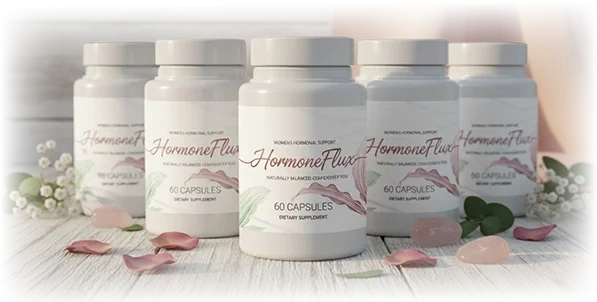
What are phytoestrogens, exactly?
Phytoestrogens are naturally occurring plant compounds whose molecular shape is similar enough to human estrogen that they can slot weakly into the body’s estrogen receptors. That structural resemblance is the whole story in miniature: they are not hormones, and they are not manufactured by the body, but their shape lets them interact with the same docking sites estrogen uses. Because the fit is loose and the signal is faint, the word most researchers reach for is “weak” — a phytoestrogen nudges where estrogen commands. A systematic summary of that work is Chen MN et al., Efficacy of phytoestrogens for menopausal symptoms: a meta-analysis and systematic review, Climacteric (2015).
In practical terms, the term covers several chemical families found across the plant kingdom. The two most relevant to menopause are isoflavones, concentrated in soy and red clover, and lignans, abundant in flaxseed. You will also see coumestans mentioned in the research literature. What unites them is not a single benefit but a shared behaviour: a mild, estrogen-adjacent interaction that the body can respond to during a time of shifting hormones.
How do plant estrogens differ from the body’s own estrogen?
The key difference between plant estrogens and the estrogen your body makes is one of strength, not category. Human estradiol binds its receptors firmly and drives powerful, system-wide effects; a phytoestrogen binds the same receptors far more weakly, producing a fraction of the response. This is why plant estrogens for women are framed as a subtle form of support rather than a replacement for hormones — and why their effects, when they appear, tend to be modest and uneven rather than dramatic.
What are phytoestrogens thought to do during menopause?
During menopause, phytoestrogens are thought to offer a faint, supportive echo of estrogen at exactly the time the body’s own levels are falling. As ovarian estrogen declines through perimenopause and menopause, the familiar cluster of transition changes — hot flashes, night sweats, disrupted sleep — tends to appear. The theory behind phytoestrogens is simple: if a plant compound can lightly engage estrogen receptors, it might take a little of the edge off that drop. It is a plausible mechanism, and it is why these compounds have been studied for decades.
It is important to frame this as a hypothesis with mixed support, not a settled fact. Some women in some studies report fewer or milder hot flashes on isoflavones; others notice nothing beyond placebo. The honest position — and the one HormoneFlux stands behind — is that phytoestrogens are a gentle, traditionally used, food-and-botanical form of support, never a treatment for menopause or any medical condition.
- Hot-flash and night-sweat comfort — the most-studied and most-hoped-for use, with modest, mixed evidence.
- A non-hormonal dietary approach — phytoestrogens are food and botanical compounds, not hormone therapy.
- Everyday menopausal ease — part of a broader lifestyle-and-nutrition picture, not a standalone fix.
- General wellbeing in context — often discussed alongside diet, sleep and stress, which travel together in this phase.
How do isoflavones for menopause actually work?
Isoflavones are the class of phytoestrogen most closely tied to menopause research, and they work by binding preferentially to one of the two estrogen receptor types in the body. Unlike the body’s estrogen, which activates both receptor subtypes strongly, soy and red clover isoflavones such as genistein, daidzein, biochanin A and formononetin show a gentle preference for the receptor subtype often described as beta. Researchers believe this selective, low-strength binding is what gives isoflavones their mild profile — enough to interact, not enough to overwhelm. The pooled trial evidence behind that sits in Taku K et al., Extracted or synthesized soybean isoflavones reduce menopausal hot flash frequency and severity: systematic review and meta-analysis of randomized controlled trials, Menopause (2012).
There is a further wrinkle that helps explain why results vary so much between women: gut bacteria. In some people, the isoflavone daidzein is converted by gut microbes into a more active compound called equol, and “equol producers” may respond differently than those whose microbiome does not make the conversion. This individual biology is one reason the same red clover extract can feel helpful for one woman and unremarkable for another — and why no honest brand can promise a universal result.
| Phytoestrogen class | Main plant sources | Notes for menopause |
|---|---|---|
| Isoflavones (genistein, daidzein) | Soybeans, soy foods, red clover | The most-studied class for hot flashes; the type in HormoneFlux via red clover. |
| Lignans | Flaxseed, sesame, whole grains | Converted by gut bacteria; studied more for general wellbeing. |
| Coumestans | Legumes, alfalfa and clover sprouts | Present in smaller amounts; less central to menopause research. |
| Prenylflavonoids | Hops | Potent in the lab but a minor dietary contributor. |

Is black cohosh a phytoestrogen, or something else?
Black cohosh is not a classic phytoestrogen, despite being the most famous menopause botanical of all. This surprises many shoppers, because black cohosh and soy isoflavones are so often mentioned in the same breath. But current scientific thinking, including the position summarised by the NIH’s NCCIH, is that black cohosh does not appear to act like estrogen in the body, and its mechanism remains debated. It may work through other pathways — possibly involving mood and temperature-regulation signalling — rather than by engaging estrogen receptors.
This distinction is exactly why a thoughtfully built formula does not rely on one story. Red clover isoflavones supply the recognised phytoestrogen pathway, while black cohosh contributes its own, separate traditional profile. Pairing them means the blend covers more than one proposed mechanism, which is a more honest design than pretending any single herb is a proven answer. For the black-cohosh side of that pairing, our deep dive on black cohosh for hot flashes goes further, and our note on red clover isoflavones covers the phytoestrogen side.

Want to see the exact dose in HormoneFlux?
HormoneFlux combines red clover isoflavones — a true phytoestrogen source — with standardised black cohosh, chasteberry, dong quai, maca and more in one daily vegetarian capsule. The multi-bottle bundles are the best value at $49 per bottle, with free U.S. shipping and a 90-day guarantee.
See the exact dose in HormoneFlux — from $49/bottleWhich foods and supplements contain the most phytoestrogens?
The richest everyday source of phytoestrogens is soy, followed by flaxseed, with red clover leading the supplement category. If you want to add plant estrogens through food, whole soy foods — edamame, tofu, tempeh, soy milk — deliver the most isoflavones, while ground flaxseed provides a different family called lignans. Legumes, sesame seeds, chickpeas and some whole grains contribute smaller amounts that add up across a varied diet. This is why a menopause-friendly plate is often described as legume-and-seed-forward rather than reliant on any one superfood.
In supplement form, red clover is the botanical most people reach for when they specifically want isoflavones, because its extract concentrates them in a standardised dose. That is the source HormoneFlux uses. For a broader look at building meals around this idea, our guide to the best foods for hormone balance is a practical companion, and it pairs well with the general principles in how to support hormone balance naturally.
| Source | Phytoestrogen type | Where it fits |
|---|---|---|
| Soy foods (tofu, tempeh, edamame) | Isoflavones | The richest dietary source; whole-food form. |
| Flaxseed (ground) | Lignans | Best absorbed ground; easy to add to meals. |
| Legumes & chickpeas | Isoflavones / coumestans | Smaller amounts across a varied diet. |
| Red clover extract | Isoflavones | Standardised supplement source — used in HormoneFlux. |
Check today’s HormoneFlux pricing →
Are phytoestrogens safe during menopause?
For most healthy adults, phytoestrogens from food and from standardised supplements are generally well tolerated, with any complaints tending to be mild and digestive. Because these compounds interact — weakly — with estrogen receptors, the sensible caution is around hormone-sensitive situations. Anyone with a personal or family history of a hormone-sensitive condition, anyone who is pregnant or breastfeeding, and anyone taking prescription medication should talk to a doctor before starting a concentrated isoflavone supplement. This is general information, not personal medical advice. The pooled trial evidence behind that sits in Lethaby A et al., Phytoestrogens for menopausal vasomotor symptoms, Cochrane Database of Systematic Reviews (2013).
The reassuring context is that populations eating soy-rich diets have consumed dietary phytoestrogens for generations, which is part of why food sources are viewed as low-risk for most people. Supplements simply concentrate the same compounds, so the same common-sense rule applies as with any botanical: choose a quality standardised product, follow the label, give it time, and loop in your doctor if you have any diagnosed condition or take medicine. HormoneFlux is a dietary supplement meant as everyday support, not a therapy.
How does HormoneFlux use phytoestrogens in its formula?
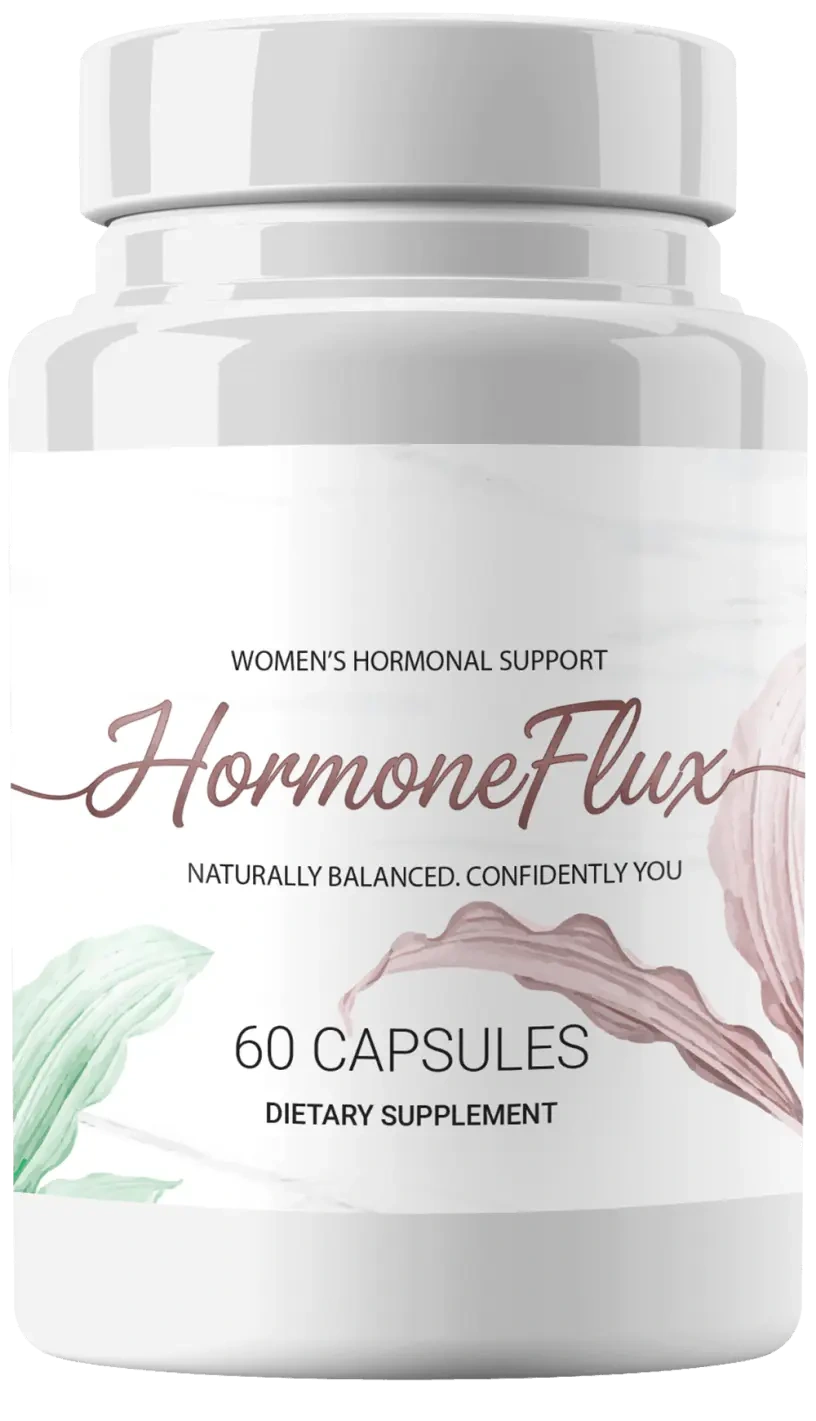
HormoneFlux uses phytoestrogens by including red clover isoflavones — a recognised plant-estrogen source — as one deliberate pathway inside a broader women’s botanical blend. Rather than presenting plant estrogens as a cure, the formula treats them as one contributor among several: red clover for the isoflavone pathway, standardised black cohosh for its separate and much-studied traditional profile, chasteberry for monthly balance, and dong quai, maca and other botanicals from the women’s-tonic canon for everyday comfort and vitality.
That multi-pathway design is the practical answer to everything above. If the single-mechanism evidence for phytoestrogens is genuinely mixed, then leaning on plant estrogens alone would overpromise; surrounding them with complementary botanicals lets each contribute its traditional strength while the formula as a whole aims for steadier day-to-day comfort. See the full panel in the HormoneFlux ingredients section, or read our overall HormoneFlux review to see how the pieces fit together.
Frequently asked questions
What are phytoestrogens in simple terms?
Phytoestrogens are naturally occurring plant compounds whose shape lets them fit weakly into the body's estrogen receptors. Because their effect is much gentler than the body's own estrogen, they are described as plant estrogens rather than hormones. They are found in foods such as soy, flaxseed and legumes, and in botanicals like red clover.
Do phytoestrogens help with menopause symptoms?
Some research suggests phytoestrogens such as soy and red clover isoflavones may modestly ease hot flashes for certain women, but the results are mixed and the effect is generally smaller than hormone therapy. They are best viewed as a gentle, food-and-botanical form of support rather than a proven treatment. Individual responses vary widely.
Is black cohosh a phytoestrogen?
No. Despite its use for menopause, current thinking is that black cohosh is not a classic phytoestrogen and does not appear to act like estrogen in the body. Its mechanism is still debated. That is why HormoneFlux pairs black cohosh with red clover isoflavones, which are true phytoestrogens, so the formula covers more than one traditional pathway.
Which foods and herbs contain the most phytoestrogens?
Soybeans and soy foods are the richest common source of isoflavone phytoestrogens, followed by flaxseed, which is high in a different class called lignans. Legumes, sesame seeds and whole grains contribute smaller amounts. Among botanicals used in supplements, red clover is the best-known concentrated source of isoflavones.
Are phytoestrogens safe to take during menopause?
For most healthy adults, phytoestrogens from food and standardised supplements are generally well tolerated. Because they interact weakly with estrogen receptors, anyone with a history of hormone-sensitive conditions, or who takes prescription medication, should speak with a doctor before using concentrated supplements. This is general information, not medical advice.
How does HormoneFlux use phytoestrogens?
HormoneFlux includes red clover isoflavones, a recognised phytoestrogen source, alongside black cohosh, chasteberry, dong quai, maca and other women's botanicals. The idea is coverage across several traditional pathways rather than relying on plant estrogens alone. It is a once-daily vegetarian capsule meant as everyday support, not a hormone treatment.
Try HormoneFlux risk-free for 90 days →
HormoneFlux is a dietary supplement, not a treatment for any medical condition. These statements have not been evaluated by the Food and Drug Administration. This product is not intended to diagnose, treat, cure or prevent any disease. Always consult a qualified healthcare professional about your individual needs.
References & further reading
- National Center for Complementary and Integrative Health (NCCIH). Menopausal Symptoms and Complementary Health Approaches. nccih.nih.gov/health/menopausal-symptoms-in-depth
- National Center for Complementary and Integrative Health (NCCIH). Soy. nccih.nih.gov/health/soy
- National Institutes of Health, Office of Dietary Supplements & MedlinePlus. Red clover. medlineplus.gov/druginfo/natural/308.html
- Examine.com. Soy Isoflavones. examine.com/supplements/soy-isoflavones
- Chen MN et al. Efficacy of phytoestrogens for menopausal symptoms: a meta-analysis and systematic review. Climacteric, 2015. pubmed.ncbi.nlm.nih.gov/25263312
- Mayo Clinic. Menopause — Diagnosis & treatment. mayoclinic.org/diseases-conditions/menopause
- Taku K et al. Extracted or synthesized soybean isoflavones reduce menopausal hot flash frequency and severity: systematic review and meta-analysis of randomized controlled trials. Menopause, 2012. pubmed.ncbi.nlm.nih.gov/22433977
- Lethaby A et al. Phytoestrogens for menopausal vasomotor symptoms. Cochrane Database of Systematic Reviews, 2013. pubmed.ncbi.nlm.nih.gov/24323914
These references describe phytoestrogens and their traditional or dietary use in general terms and do not constitute evidence that any product treats, cures or prevents any condition.
Keep reading: red clover isoflavones explained · black cohosh for hot flashes · the best foods for hormone balance · back to the HormoneFlux blog · homepage.