How to support hormone balance naturally: the HormoneFlux guide

Updated September 2026 · reviewed by the HormoneFlux Research Team. We are an independent information resource, not a medical provider, and this article is educational rather than medical advice.
To support hormone balance naturally means using everyday food, movement, sleep and stress habits — and, if you choose, traditionally used botanicals like black cohosh, chasteberry and maca — to help your body’s natural hormonal rhythm feel steadier through the month and the midlife years. It is about consistency over extremes, and it works alongside, not instead of, the guidance of your doctor.
The fastest route to a steadier hormonal day, in one place.
- The goal
- Soften the natural rises and falls of the monthly cycle and midlife so your energy, mood and comfort feel more even.
- Biggest levers
- What you eat and how you move matter most — fibre, healthy fats, protein, regular activity and good sleep.
- Stress matters
- Chronic stress keeps cortisol high, which ripples across the hormonal system; daily decompression helps.
- Where botanicals fit
- Herbs such as black cohosh, chasteberry, maca and ashwagandha can support the routine, but they are not a treatment for any disease.
- Timeframe
- Some habits help within days; diet, sleep and fitness changes and botanicals usually show over several weeks to a few months, and results vary.
If you have ever felt your energy, mood or comfort shift with the calendar — or noticed those shifts deepen through your late thirties, forties and beyond — you have felt your hormones in motion. For most women the aim is not to fight that rhythm but to feel a little steadier within it, and the levers with the most influence are the everyday ones. This guide walks through them in plain language and shows where a botanical formula like HormoneFlux can play a supporting role.
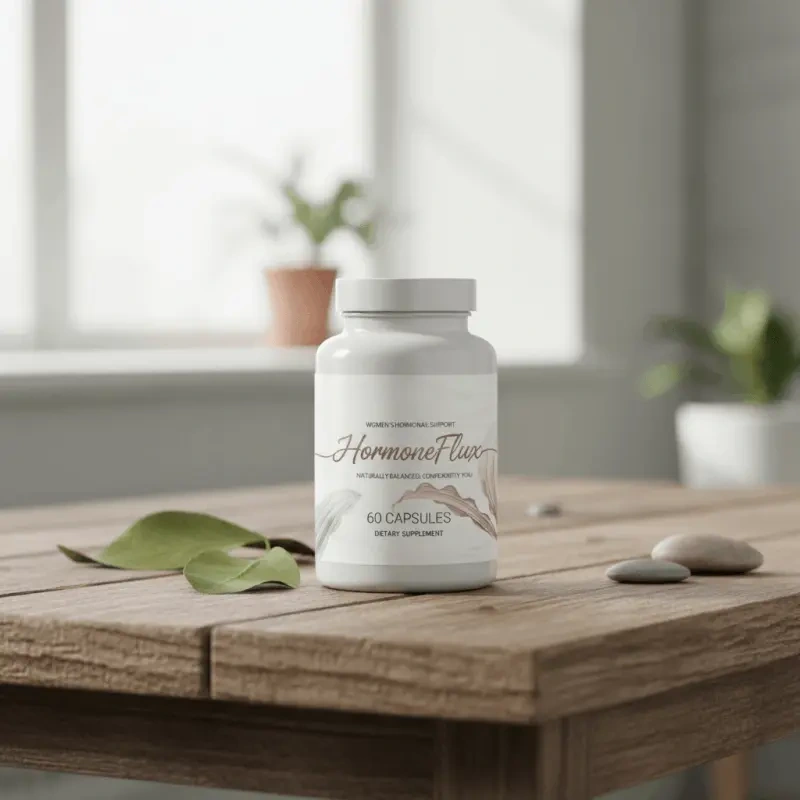
What does it mean to support hormone balance naturally?
Supporting hormone balance naturally is the practice of using nutrition, movement, sleep and stress management to help your body do what it already does: rise and fall through its own rhythm with fewer sharp edges. It is not a cure, and it is not a way to override your physiology — it is a set of small, repeatable choices that make the natural ups and downs gentler. Two ideas anchor everything below: consistency beats intensity, and these habits stack — each helps a little, and together they help a lot.
Why do a woman’s hormones shift in the first place?
A woman’s hormonal landscape changes across two timescales at once. Within each month, oestrogen and progesterone rise and fall to orchestrate the menstrual cycle, which is why energy, sleep and mood can feel different in the days before a period. Across the longer arc of the perimenopause and menopause years, the ovaries gradually produce less oestrogen, and that slow transition brings its own familiar changes. The source most often cited here is Harlow SD et al., Executive summary of the Stages of Reproductive Aging Workshop + 10: addressing the unfinished agenda of staging reproductive aging, Journal of Clinical Endocrinology & Metabolism (2012).
Several ordinary factors can make those shifts feel wider: irregular meals, chronic stress, short sleep, very low body-fat or very high body-fat, and a sedentary day. The good news is that most of these are things you can nudge in the other direction. Below are the habits with the most leverage, roughly in order of impact.
What are the most effective everyday habits?
1. Build meals around fibre, protein and whole foods
Blood-sugar swings and hormone swings travel together, so the plate that steadies one tends to steady the other. Fibre slows digestion, protein keeps you full, and healthy fats supply the raw material your body uses to make hormones. Aim for half your plate non-starchy vegetables, a quarter lean protein, and a quarter whole, intact carbohydrates, with a little healthy fat at each meal. Readers weighing this up usually find our guide to the best foods for hormone balance useful next. The pooled trial evidence behind that sits in Ruiz-Cerezo A et al., Physical exercise and mind-body exercise in the menopausal transition: A systematic review and meta-analysis of randomized controlled trials, European Journal of Obstetrics & Gynecology and Reproductive Biology (2026).
Foods that support hormone balance include:
- Cruciferous vegetables — broccoli, cauliflower, cabbage and kale, which supply compounds involved in healthy oestrogen metabolism.
- Flaxseed and other seeds — a natural source of lignans, a type of phytoestrogen.
- Beans, lentils and soy foods — fibre plus plant compounds long studied in women’s wellness.
- Fatty fish, olive oil, nuts and avocado — the healthy fats hormone production relies on.
- Protein at every meal — eggs, fish, poultry, tofu and Greek yoghurt.
2. Move your body most days
Regular activity is one of the most reliable supports for a steadier hormonal day. A mix of aerobic movement — walking, cycling, swimming — and a little resistance training helps your body manage insulin, supports bone and muscle through the menopausal years, and lifts mood. You do not need a gym: brisk walks, bodyweight moves and gardening all count.
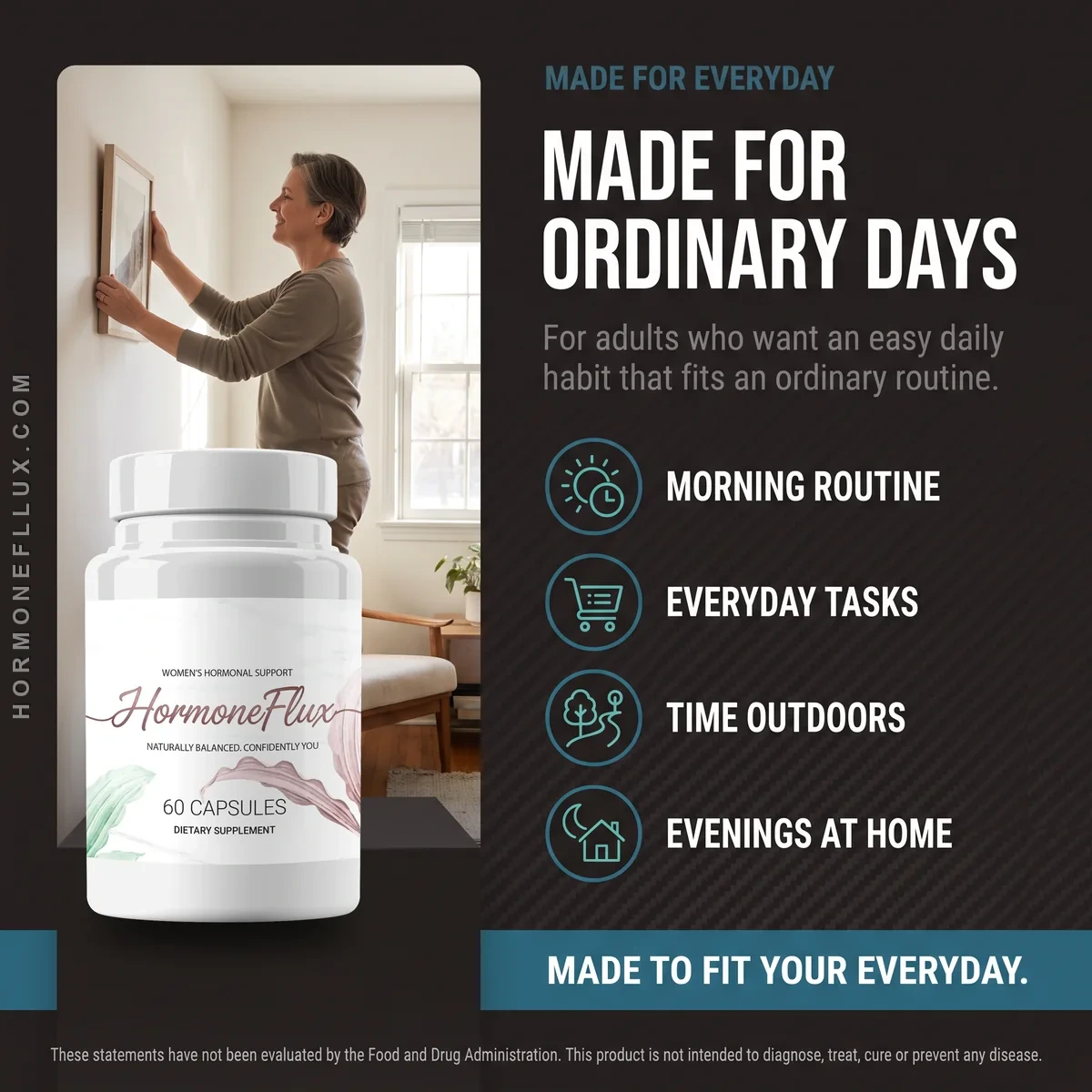
3. Protect your sleep
Sleep is when much of the body’s hormonal housekeeping happens, and it is often the first thing disrupted during the monthly cycle and the menopausal transition. Seven to nine hours on a regular schedule, a cool dark room and a wind-down routine do more for balance than almost any single supplement.
4. Manage stress and cortisol
Chronic stress keeps cortisol elevated, and cortisol does not operate in isolation — it interacts with the rest of your hormonal system. Simple, repeatable decompression — a walk, slow breathing, time outdoors, a few minutes of stretching — is not indulgence; it is maintenance. This is also where adaptogenic botanicals such as ashwagandha and maca have a traditional role. It is a point we return to when looking at balancing hormones in perimenopause.
See how HormoneFlux fits your routine →
Which botanicals are part of the conversation?
Supplements are a support to the habits above, not a substitute, and never a treatment for any condition. Still, a handful of botanicals have long been part of the women’s-wellness conversation. Here is a snapshot of the best-known ones, several of which appear in HormoneFlux. The pooled trial evidence behind that sits in Franco OH et al., Use of Plant-Based Therapies and Menopausal Symptoms: A Systematic Review and Meta-analysis, JAMA (2016).
| Botanical | Why it is discussed | Traditional / general role |
|---|---|---|
| Black cohosh | Menopause herb | One of the most used and researched botanicals for menopausal comfort. |
| Chasteberry (vitex) | Cycle herb | Traditionally used to support premenstrual comfort and monthly balance. |
| Red clover | Isoflavone source | A natural source of phytoestrogens studied in the context of menopause. |
| Maca | Adaptogen | A Peruvian root traditionally taken for energy, stamina and vitality. |
| Ashwagandha | Adaptogen | An Ayurvedic herb valued for everyday stress resilience and calm. |
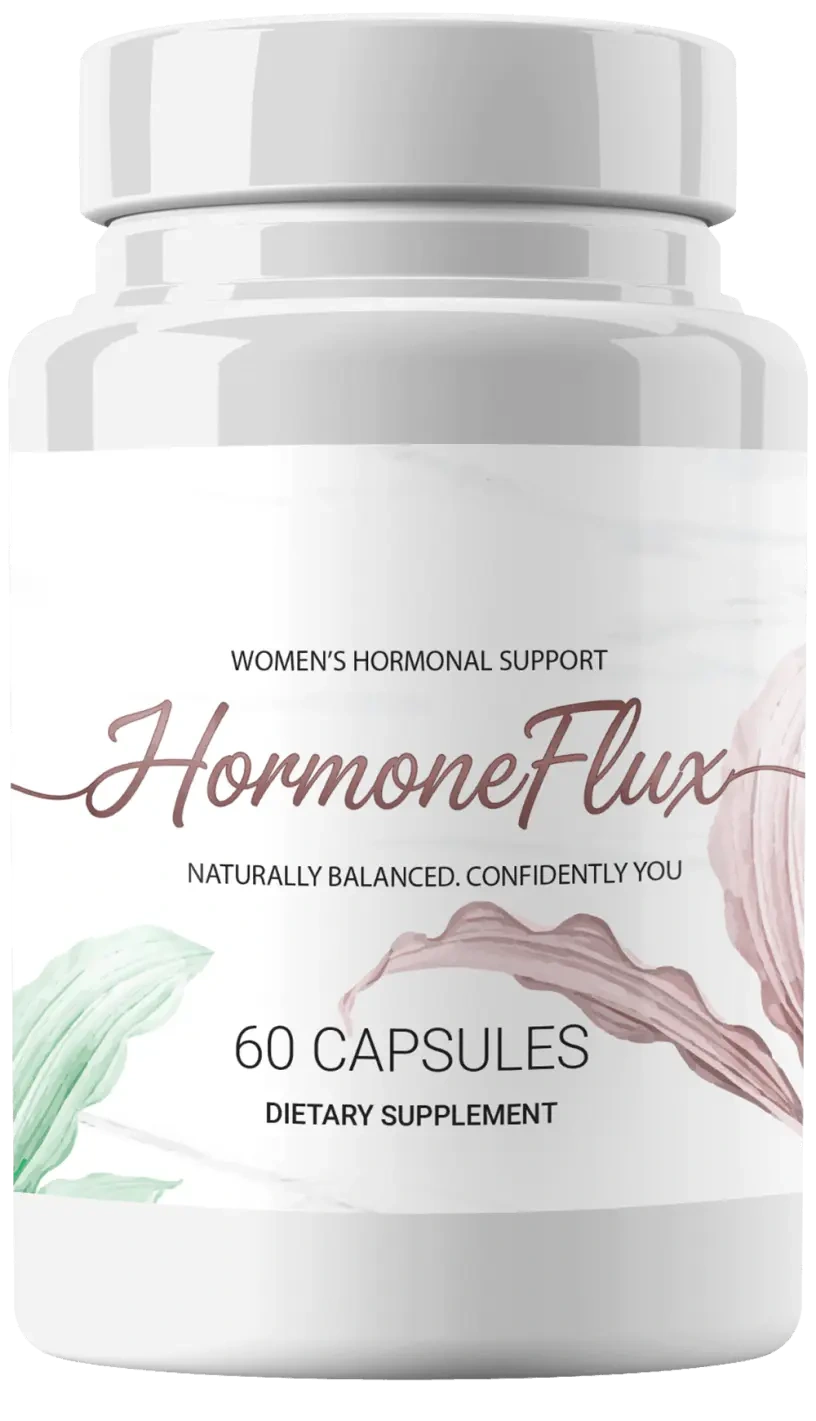
HormoneFlux brings these together with dong quai, wild yam and sage in one daily vegetarian capsule. For a closer look, read our guide to black cohosh and chasteberry for menopause, or see the full ingredients section.

Make it a daily habit
HormoneFlux is a once-daily capsule pairing eight women's botanicals in one simple step. The six-bottle bundle is the best value at $49 per bottle, with free U.S. shipping and a 90-day guarantee.
Order HormoneFlux — from $49/bottleHow do you build a simple daily routine?
The best routine is the one you will keep. Rather than overhauling everything at once, stack one small habit at a time until each feels automatic:
- Anchor breakfast in protein and fibre so the day starts steady.
- Add a serving of vegetables to your two largest meals.
- Take a 10-to-15-minute walk most days.
- Protect a consistent bedtime so sleep does the quiet work.
- Build in one daily decompression habit to keep stress in check.
- Take any supplement at the same time daily — for HormoneFlux, two capsules with a meal.
Which habits work fastest? An at-a-glance table
A “fast” habit is one you can feel within days; a “slow” habit reshapes your baseline over weeks or months. Both matter. This table sorts the core habits by how quickly they tend to help and how much effort they ask.
| Habit | Typical time to notice | Everyday effort |
|---|---|---|
| Daily decompression / breathing | Days | Low |
| Higher-fibre, whole-food meals | Days to weeks | Medium |
| Regular sleep schedule | Weeks | Medium |
| Consistent activity & strength work | Weeks to months | Higher |
| Botanical support, taken daily | Weeks to months | Low |
When should you talk to a doctor?
Natural habits are for supporting your everyday sense of balance; they are not a replacement for medical care. Speak with your doctor if you are pregnant or nursing, under 18, take any medication (including hormone therapy or the contraceptive pill), have a diagnosed condition, or notice changes that concern you — such as unusually heavy or irregular bleeding, persistent low mood, or new symptoms. A quick conversation ensures anything you add fits safely with your care.
Frequently asked questions
What does it mean to support hormone balance naturally?
It means using everyday food, movement, sleep and stress habits - and, optionally, traditionally used botanicals like black cohosh and chasteberry - to help your body's natural hormonal rhythm feel steadier. It complements, rather than replaces, medical care.
Can food really affect a woman's hormones?
Food provides the fibre, healthy fats and plant compounds your body uses across its hormonal systems, and steadier blood sugar tends to mean steadier energy and mood. A whole-food pattern rich in vegetables, fibre, healthy fats and protein is a foundation for balance.
Do botanicals like black cohosh and chasteberry help?
Black cohosh and red clover are traditionally used for menopausal comfort, and chasteberry for monthly balance. They are a support to good habits, not a treatment for any disease, and anyone on medication should ask a doctor first.
How long does it take to feel steadier?
Some habits, like daily decompression, help within days, while diet, sleep and fitness changes usually show over several weeks. Botanicals build their support gradually, so most women give them several weeks to a few months, and results vary.
Is exercise or diet more important for hormone balance?
Both matter and they reinforce each other. Whole-food nutrition and regular movement are the two biggest levers; sleep and stress management sit close behind. No single habit does it alone, which is why stacking them works best.
Can I support hormone balance during perimenopause?
Yes. The same foundations - nutrition, movement, sleep and stress care - are especially valuable in the perimenopause and menopause years, and certain botanicals are traditionally used for comfort during that transition. Discuss your options with your doctor.
Try HormoneFlux risk-free for 90 days →
HormoneFlux is a dietary supplement, not a treatment for any medical condition. These statements have not been evaluated by the Food and Drug Administration. This product is not intended to diagnose, treat, cure or prevent any disease. Always consult a qualified healthcare professional about your individual needs.
References & further reading
- National Center for Complementary and Integrative Health (NCCIH). Menopausal Symptoms and Complementary Health Approaches. nccih.nih.gov/health/menopausal-symptoms-in-depth
- Office on Women’s Health, U.S. Department of Health & Human Services. Menopause. womenshealth.gov/menopause
- National Center for Complementary and Integrative Health (NCCIH). Black Cohosh. nccih.nih.gov/health/black-cohosh
- Examine.com. Vitex agnus-castus (Chasteberry). examine.com/supplements/vitex-agnus-castus
- Harlow SD et al. Executive summary of the Stages of Reproductive Aging Workshop + 10: addressing the unfinished agenda of staging reproductive aging. Journal of Clinical Endocrinology & Metabolism, 2012. pubmed.ncbi.nlm.nih.gov/22344196
- Ruiz-Cerezo A et al. Physical exercise and mind-body exercise in the menopausal transition: A systematic review and meta-analysis of randomized controlled trials. European Journal of Obstetrics & Gynecology and Reproductive Biology, 2026. pubmed.ncbi.nlm.nih.gov/42520515
- Franco OH et al. Use of Plant-Based Therapies and Menopausal Symptoms: A Systematic Review and Meta-analysis. JAMA, 2016. pubmed.ncbi.nlm.nih.gov/27327802
These references describe the ingredients and habits in general terms and do not constitute evidence that any product treats, cures or prevents any condition.
Keep reading: the best foods for hormone balance · black cohosh & chasteberry for menopause · back to the HormoneFlux blog · homepage.