Perimenopause hormone balance with HormoneFlux: a practical daily routine

Updated September 2026 · reviewed by the HormoneFlux Research Team. We are an independent information resource, not a medical provider, and this article is educational rather than medical advice.
Perimenopause hormone balance is the practice of supporting steadier energy, mood and sleep during the years before your last period, when oestrogen and progesterone naturally rise and fall in a less predictable rhythm. It is not something a single pill controls; it is built from daily habits — how you sleep, move, eat and handle stress — and it works best when those habits are consistent. In HormoneFlux, a once-daily botanical capsule is designed to sit inside that routine as everyday support, not as a hormone drug or a cure for the transition.
How do you balance hormones in perimenopause?
- The honest truth
- No product “balances” perimenopause hormones on demand; the reliable lever is a consistent routine of sleep, movement, nutrition and stress care.
- Start with sleep
- Protecting seven to nine hours does more for mood and energy than almost any supplement.
- Move and eat for steadiness
- Strength work, gentle cardio and a protein- and fibre-forward plate keep energy even.
- Where HormoneFlux fits
- A daily botanical capsule can be the repeatable anchor habit alongside the basics — check the label for the dose.
If your sleep is patchy, your patience shorter, and your energy swinging without warning, you are likely somewhere in perimenopause. This is a how-to guide, not a symptom list: it lays out a practical, evidence-led routine you can keep, then shows where a daily supplement such as HormoneFlux realistically fits.

What is perimenopause, and why does hormone balance feel harder now?
Perimenopause is the transitional phase — often lasting four to eight years — leading up to menopause, defined as twelve consecutive months without a period. The ovaries wind down gradually rather than switching off, so oestrogen and progesterone no longer follow the steady monthly pattern of your thirties — instead they fluctuate, which is why these years can feel so unpredictable. The source most often cited here is Harlow SD et al., Executive summary of the Stages of Reproductive Aging Workshop + 10: addressing the unfinished agenda of staging reproductive aging, Journal of Clinical Endocrinology & Metabolism (2012).
That variability is why familiar habits stop working as reliably. A late night you once shrugged off can now derail sleep for days; a stressful week hits mood harder; hot flushes and changes in concentration come and go. None of this means anything is broken; the routine that carried you through your thirties simply needs a consistency-first refresh.
How do you balance hormones in perimenopause? The routine at a glance
Balancing hormones in perimenopause is less about any single intervention and more about stacking four everyday habits so they reinforce each other. Sleep, movement, nutrition and stress management each influence the same systems — blood sugar, cortisol, and how well you cope with hormonal swings — so improving one makes the others easier. The table below is the whole routine at a glance.
| Pillar | Everyday goal | Why it matters in perimenopause |
|---|---|---|
| Sleep | 7–9 hours, consistent bed and wake times | Buffers mood and energy against hormonal swings |
| Movement | Strength 2–3×/week + daily walking | Protects muscle and bone, steadies blood sugar and mood |
| Nutrition | Protein + fibre at each meal; phytoestrogen foods | Keeps energy even and supports the transition |
| Stress | Daily wind-down; limit alcohol and late caffeine | Lowers the cortisol load that amplifies symptoms |
| Daily support | One repeatable anchor habit (e.g. a capsule) | Makes the whole routine easier to keep consistent |
How does sleep affect perimenopause hormone balance?
Sleep is the single highest-leverage habit for perimenopause, because poor sleep raises next-day cortisol, worsens mood and cravings, and makes every other symptom feel louder. The catch is that fluctuating hormones can themselves disturb sleep — night sweats and early waking are common — so protecting it now takes real intention.
What actually helps you sleep better?
Consistency is the anchor: keep the same bed and wake times, even at weekends. Keep the bedroom cool and dark to blunt night sweats; get daylight early to steady your rhythm; and taper caffeine after early afternoon. Alcohol deserves singling out — it may feel relaxing but reliably fragments the second half of the night, and cutting back is one of the fastest wins.
What kind of movement helps most in perimenopause?
The most protective form of exercise in perimenopause is strength training, because falling oestrogen accelerates the loss of muscle and bone that comes with age. Two to three short resistance sessions a week — body-weight moves, bands or weights — help preserve lean muscle, support metabolism, and protect bone density. There is a fuller treatment of this in our guide to how to manage hot flashes naturally. The pooled trial evidence behind that sits in Ruiz-Cerezo A et al., Physical exercise and mind-body exercise in the menopausal transition: A systematic review and meta-analysis of randomized controlled trials, European Journal of Obstetrics & Gynecology and Reproductive Biology (2026).
Strength is the priority, but not the whole picture. Daily walking and gentle cardio support heart health and mood, while yoga or stretching help with stress and flexibility. Aim for movement most days, with a couple including resistance work — the best routine is the one you will actually repeat.

See the exact dose in HormoneFlux
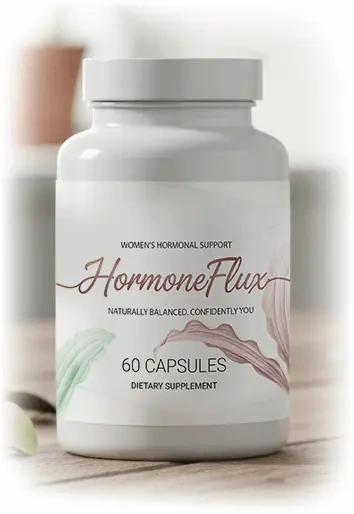
HormoneFlux is a once-daily capsule that pairs black cohosh, chasteberry, dong quai, maca and other women’s botanicals in one repeatable step. The six-bottle bundle is the best value, with free U.S. shipping and a 90-day guarantee.
Check today’s HormoneFlux pricing →Which foods support perimenopause hormone balance?
The most useful eating pattern in perimenopause is a protein- and fibre-forward plate that keeps blood sugar and energy steady. As metabolism shifts, meals built around protein, fibre from vegetables, legumes and whole grains, and healthy fats blunt the energy crashes and cravings that worsen mood swings — ordinary good nutrition that simply matters more now. That literature is reviewed in Liu YC et al., Dietary interventions and nutritional strategies for menopausal health: a mini review, Frontiers in Nutrition (2025).
Do phytoestrogen foods make a difference?
Phytoestrogens are plant compounds — in soy, flaxseed, chickpeas and other legumes — structurally similar to oestrogen and traditionally linked to the menopausal transition. The research is mixed and effects are modest, so treat them as part of a varied diet, not a guaranteed remedy. Limiting alcohol, excess caffeine and processed foods usually does as much for sleep and mood as any single “superfood.” See our guide to the best foods for hormone balance.
| Eat more of | Why | Go easy on |
|---|---|---|
| Protein at each meal | Preserves muscle, steadies appetite | Sugary snacks |
| Fibre: veg, legumes, whole grains | Supports blood sugar and digestion | Refined carbohydrates |
| Phytoestrogen foods (soy, flax) | Traditionally linked to the transition | Excess alcohol |
| Healthy fats (olive oil, nuts) | Satiety and heart health | Late-day caffeine |
| Calcium and vitamin D sources | Support bone health | Ultra-processed foods |
How does stress management fit into natural perimenopause support?
Managing stress matters in perimenopause because chronic stress keeps cortisol elevated, and a high cortisol signal ripples across the same systems that already feel unsettled during the transition. You cannot remove every stressor, but lowering the daily load often takes the edge off mood swings, poor sleep and that wired-but-tired feeling. If that is where you are, start with how to relieve PMS naturally.
The practical version is small and repeatable: a few minutes of slow breathing, a short walk outdoors, screen-free time before bed, or any wind-down ritual you will keep. Social connection and saying no to a few over-commitments count too. Our overview of how to support hormone balance naturally goes deeper on the habit side.

Where do perimenopause supplements like HormoneFlux fit?
Perimenopause supplements are best understood as a consistent daily habit that supports a wider routine — not a substitute for sleep, movement, nutrition or medical care. Several of these botanicals have modest supportive evidence for comfort during the transition, while others are more traditional than proven — and being honest about that difference matters.
HormoneFlux takes the blend approach: rather than a single herb, it combines several women’s botanicals in one once-daily capsule so the routine stays simple. The table below summarises what the evidence does and does not suggest for the main ingredients.
| Botanical | Traditionally used for | Strength of evidence |
|---|---|---|
| Black cohosh | Menopausal comfort, hot flushes | Modest — mixed but among the better-studied |
| Red clover / soy isoflavones | Transition support (phytoestrogens) | Modest — small effects in some trials |
| Chasteberry (vitex) | Monthly / cyclical balance | Emerging — more studied for PMS |
| Dong quai | Traditional women’s tonic | Weak — largely traditional use |
| Maca | Energy and vitality | Emerging — small studies |
How does HormoneFlux support a perimenopause routine day to day?
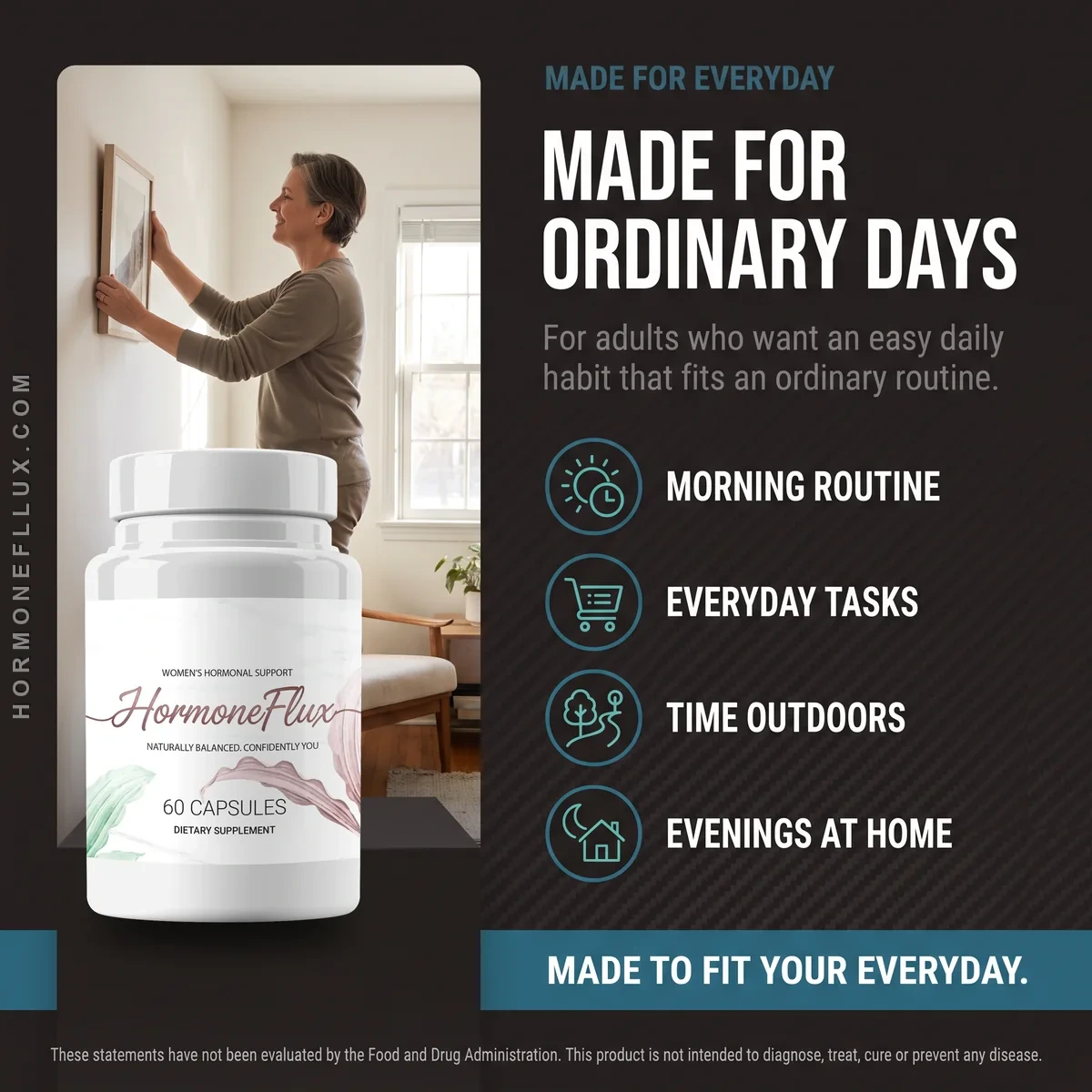
Within a perimenopause routine, HormoneFlux is designed to be the easy, once-daily anchor that pairs with the lifestyle basics rather than replacing them. Taken with breakfast, it removes a decision and gives the routine a reliable rhythm.
Give any botanical routine a fair trial of about eight to twelve weeks while you keep the lifestyle habits going. For the precise amount per serving, read the supplement facts panel and see the full line-up in the HormoneFlux ingredients section. Our guides on red clover isoflavones and black cohosh and chasteberry for menopause cover the individual herbs.
See the exact dose in HormoneFlux →
Frequently asked questions
What is the best way to balance hormones in perimenopause?
There is no single fix. The most reliable approach is a consistent routine: protected sleep, regular strength and cardio, a protein- and fibre-forward diet with phytoestrogen foods, and steady stress management. A daily botanical such as HormoneFlux can support those habits, not replace them.
Can supplements really help with perimenopause symptoms?
Some botanicals in perimenopause supplements, such as black cohosh and soy or red clover isoflavones, have modest supportive evidence for comfort during the transition, while others are more traditional than proven. HormoneFlux is best viewed as one daily habit within a wider routine, not a treatment for any condition.
How long does it take to feel more balanced in perimenopause?
Lifestyle changes and most botanicals are usually given a fair trial of about eight to twelve weeks taken consistently. Some people notice better sleep or steadier energy sooner, but perimenopause can last several years, so aim for a sustainable routine rather than an overnight change.
Is HormoneFlux safe to take during perimenopause?
HormoneFlux is a botanical dietary supplement and is generally well tolerated, but it is not right for everyone. Anyone who is pregnant or breastfeeding, has a hormone-sensitive, thyroid or liver condition, or takes prescription medication should speak with a doctor before starting it.
Do I still need to see a doctor if I take a perimenopause supplement?
Yes. A supplement does not replace medical care. Perimenopause symptoms can overlap with thyroid problems and other conditions, and options such as hormone therapy are medical decisions. Keep your doctor in the loop, especially for heavy bleeding, severe symptoms, or anything that worries you.
What foods help with perimenopause hormone balance?
Diets rich in protein, fibre, whole grains, legumes, vegetables and healthy fats support steadier energy and blood sugar, while phytoestrogen foods such as soy, flaxseed and chickpeas are traditionally linked to the transition. Limiting alcohol, excess caffeine and processed foods also helps sleep and mood.
Try HormoneFlux risk-free for 90 days →
HormoneFlux is a dietary supplement, not a treatment for any medical condition. These statements have not been evaluated by the Food and Drug Administration. This product is not intended to diagnose, treat, cure or prevent any disease. Always consult a qualified healthcare professional about your individual needs.
References & further reading
- National Institute on Aging (NIH). What Is Menopause? — perimenopause and the transition. nia.nih.gov/health/menopause
- Mayo Clinic. Perimenopause — symptoms and causes. mayoclinic.org/perimenopause
- National Center for Complementary and Integrative Health (NCCIH). Menopausal Symptoms: In Depth. nccih.nih.gov/health/menopausal-symptoms-in-depth
- Harvard T.H. Chan School of Public Health. Straight Talk About Soy — phytoestrogens. hsph.harvard.edu/nutritionsource/soy
- Examine.com. Menopause — evidence-based supplement and lifestyle summary. examine.com/conditions/menopause
- Harlow SD et al. Executive summary of the Stages of Reproductive Aging Workshop + 10: addressing the unfinished agenda of staging reproductive aging. Journal of Clinical Endocrinology & Metabolism, 2012. pubmed.ncbi.nlm.nih.gov/22344196
- Ruiz-Cerezo A et al. Physical exercise and mind-body exercise in the menopausal transition: A systematic review and meta-analysis of randomized controlled trials. European Journal of Obstetrics & Gynecology and Reproductive Biology, 2026. pubmed.ncbi.nlm.nih.gov/42520515
- Liu YC et al. Dietary interventions and nutritional strategies for menopausal health: a mini review. Frontiers in Nutrition, 2025. pubmed.ncbi.nlm.nih.gov/41473185
These references describe perimenopause in general terms and do not constitute evidence that any product treats, cures or prevents any condition.
Keep reading: how to support hormone balance naturally · back to the HormoneFlux blog · the HormoneFlux review.