Natural Remedies for Menopause Fatigue, and Where HormoneFlux Fits

Updated September 2026 · reviewed by the HormoneFlux Research Team. We are an independent information resource, not a medical provider, and this article is educational rather than medical advice.
Natural menopause fatigue remedies are the everyday, non-drug ways to steady the low energy that so often arrives with the transition — protecting sleep, eating for stable blood sugar, moving daily, calming stress, and, for some women, leaning on traditional adaptogens such as maca and ashwagandha. None of them is a cure, but stacked together they can genuinely move the dial. Adaptogens like the ones in HormoneFlux are one gentle, once-daily piece of that bigger picture — not a replacement for the basics that do the heavy lifting.
Menopause fatigue remedies, in one honest paragraph.
- The short version
- The best remedies are habits — sleep, protein and iron, daily movement, steady stress — with adaptogens as an add-on, not a fix.
- Why energy dips
- Shifting oestrogen and progesterone, night sweats that fracture sleep, and higher stress all stack together.
- Adaptogens to know
- Maca for traditional stamina; ashwagandha for stress and sleep — both in HormoneFlux.
- See a doctor if
- Fatigue is severe, sudden, or lingers — thyroid, low iron and sleep apnoea can mimic it.
If you have hit your forties or fifties and felt your energy quietly drain out through the afternoon, you are in good company. Fatigue is one of the most commonly reported — and most frustrating — experiences of the transition, because it rarely has one obvious cause. The good news: it responds well to a handful of practical, evidence-led habits that a thoughtful botanical blend can support.

Why does energy dip so much during menopause?
Menopause fatigue is the persistent, often afternoon-heavy tiredness that arrives as the body moves through the hormonal transition, and it usually has several overlapping causes rather than one. As oestrogen and progesterone fluctuate and settle lower, they touch sleep, mood, temperature and blood sugar — which is why the fix is rarely a single supplement and almost always a combination of small daily changes.
The biggest single driver is broken sleep: night sweats and hot flashes fragment rest, so even eight hours in bed can be poor-quality sleep. Add the mood shifts many women notice, a slower metabolism and the stress of midlife, and you have the kind of tiredness coffee only papers over.
Is it hormones, or is it just poor sleep?
Usually it is both, feeding each other in a loop. Falling progesterone makes sleep lighter, while night sweats physically wake you; the resulting sleep debt amplifies the mood swings and brain fog of the transition. Breaking the loop at the sleep end is often the fastest win.
What are the best natural remedies for menopause fatigue?
The best natural menopause fatigue remedies are the foundational habits that protect your energy at its source: sleep, nutrition, movement and stress management. They are what the evidence most consistently supports — the base that has to be in place before any supplement can do meaningful work on top. The pooled trial evidence behind that sits in Ruiz-Cerezo A et al., Physical exercise and mind-body exercise in the menopausal transition: A systematic review and meta-analysis of randomized controlled trials, European Journal of Obstetrics & Gynecology and Reproductive Biology (2026).
- Protect sleep first — a cool, dark room, a consistent bedtime and less afternoon caffeine do more for energy than almost anything else.
- Eat for steady blood sugar — protein at every meal, enough iron-rich food and fewer refined-carb crashes keep the afternoon slump smaller.
- Move most days — even a brisk walk lifts mood and sleep; resistance training protects the muscle that keeps metabolism steady.
- Steady your stress — breathwork, time outdoors and realistic boundaries lower the cortisol load.
- Consider traditional adaptogens — maca and ashwagandha, long used for stamina and calm, can sit on top of the basics.
Notice the order: adaptogens come last deliberately — a helpful add-on, not a substitute for the four habits above. Our guide to how to support hormone balance naturally pairs well with this one.
| Natural lever | Why it helps energy | How fast |
|---|---|---|
| Better sleep hygiene | Cuts the sleep debt that drives daytime fatigue | Days to 2 weeks |
| Protein & iron at meals | Steadies blood sugar; supports oxygen-carrying iron | 1–3 weeks |
| Daily movement | Improves mood, sleep quality and stamina | 2–4 weeks |
| Adaptogens (maca, ashwagandha) | Traditional everyday-vitality and calm support | 8–12 weeks |
Do adaptogens like maca and ashwagandha help low energy in menopause?
Adaptogens are botanicals traditionally used to help the body adapt to stress and maintain steady everyday energy, and two of the best known — maca and ashwagandha — are why they come up in the menopause-fatigue conversation. They are not stimulants; they are used gradually, over weeks, to support the systems a caffeine spike only masks. The trial itself is Stojanovska L et al., Maca reduces blood pressure and depression, in a pilot study in postmenopausal women, Climacteric (2015).
Maca (Lepidium meyenii) is a Peruvian root long used for stamina and vitality, and small studies have explored it for mood and quality of life in the transition; the research is early and mixed, so it is best framed as a traditional energy support, not a proven remedy. Ashwagandha (Withania somnifera) is an adaptogen studied for stress and sleep quality — and because poor sleep and stress are two of the biggest drivers of menopause tiredness, it is a sensible fit. See our deeper dives on maca root for women’s energy and ashwagandha for women’s hormones.
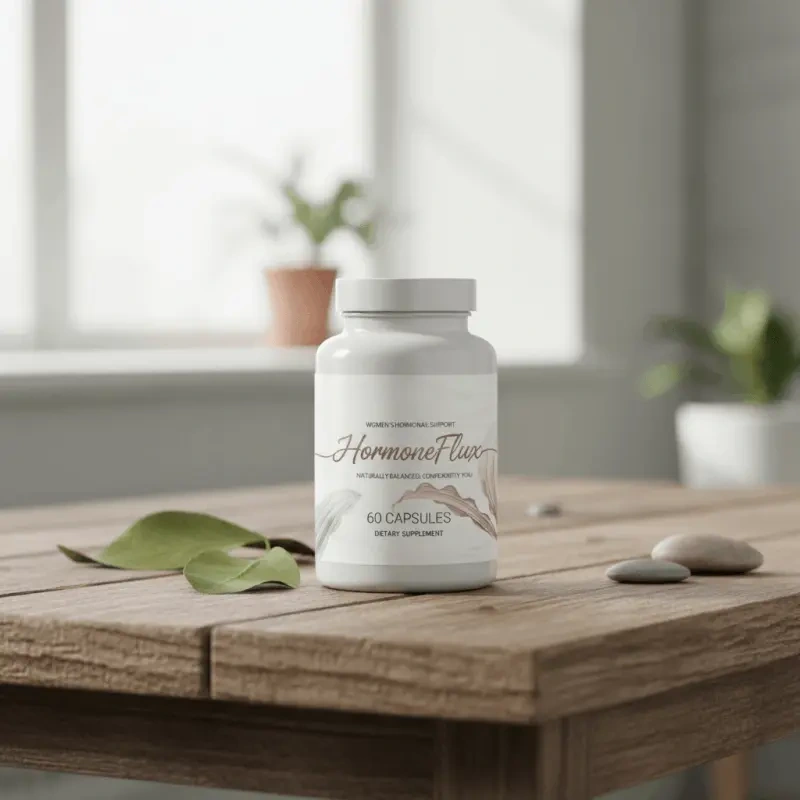

Want to see the exact dose in HormoneFlux?
HormoneFlux pairs adaptogenic maca and ashwagandha with black cohosh, chasteberry, dong quai and more in one daily vegetarian capsule — everyday energy and hormonal support in a single step. The six-bottle bundle is the best value at $49 per bottle, with free U.S. shipping and a 90-day guarantee.
See the exact dose in HormoneFlux — from $49/bottleHow should you use adaptogens for energy, and at what dose?
A sensible way to use adaptogens for menopause energy is a moderate, consistent daily amount taken at the same time each day, given eight to twelve weeks before you judge the fit. There is no benefit to megadosing; because maca and ashwagandha work slowly, consistency matters more than any single capsule. The trial itself is Salve J et al., Adaptogenic and Anxiolytic Effects of Ashwagandha Root Extract in Healthy Adults: A Double-blind, Randomized, Placebo-controlled Clinical Study, Cureus (2019).
In a well-built women’s formula these botanicals sit within everyday ranges rather than being pushed to extremes — the approach HormoneFlux takes. Follow the label and treat the numbers below as an orientation, not a prescription.
| Adaptogen | Traditional use | Common daily range |
|---|---|---|
| Maca root (Lepidium meyenii) | Stamina, everyday vitality, mood in the transition | ~1.5–3 g of root powder or a standardised extract equivalent |
| Ashwagandha (Withania somnifera) | Stress resilience and sleep quality | ~250–600 mg of a standardised root extract |
| Duration before judging | Builds gradually | 8–12 weeks of daily use |
Check today’s HormoneFlux pricing →
What can you do today to boost energy in menopause?
The fastest way to boost energy in menopause is to fix the three things that quietly steal it: fragmented sleep, blood-sugar crashes and a sedentary afternoon. A few targeted tweaks, repeated daily, compound quickly — a realistic day-one start that costs nothing:
- Anchor a wake time and get morning daylight within an hour of waking to reset your body clock.
- Front-load protein at breakfast — eggs, yoghurt or a shake — to flatten the mid-morning dip.
- Walk after lunch for ten minutes to blunt the post-meal slump instead of a third coffee.
- Cut caffeine after 2 pm so it is out of your system before bed.
- Keep the bedroom cool — a lower temperature and breathable bedding soften night sweats that wake you.
Layer a once-daily botanical blend on top if you want extra support, and give it a couple of months to compound.
When should menopause fatigue be checked by a doctor?
Menopause fatigue should be checked by a doctor whenever it is severe, comes on suddenly, or fails to improve after a few weeks of better sleep and nutrition — because several treatable conditions can hide behind it. An underactive thyroid, low iron or B12, sleep apnoea and depression all cause the same drained feeling and need proper testing. Natural remedies are for ordinary transition tiredness, not red-flag fatigue.
Speak to a professional sooner if tiredness comes with breathlessness, persistently low mood, or unexplained weight change — and always check in before starting a new supplement if you are pregnant, breastfeeding, on medication, or managing a diagnosed condition. This is general information, not personal medical advice.

Why does HormoneFlux include adaptogens for energy?
HormoneFlux includes maca and ashwagandha because everyday energy and calm are central to the menopausal experience, not a side note. Rather than betting on one herb, it surrounds its adaptogens with black cohosh, chasteberry, dong quai and wild yam — coverage across the whole transition, energy included, in one daily capsule.
That design also answers the honest limitation in the research: because single-ingredient energy evidence is early and mixed, a thoughtful formula lets each botanical contribute its traditional strength while the habits above do the foundational work. See the panel in the HormoneFlux ingredients section, or compare the two in our maca vs ashwagandha guide.
Frequently asked questions
What are the best natural remedies for menopause fatigue?
The most reliable natural menopause fatigue remedies are the unglamorous basics: protecting sleep, eating enough protein and iron, moving most days, and steadying blood sugar and stress. Adaptogens such as maca and ashwagandha are traditionally used for everyday energy and calm and can sit alongside those basics. None is a cure, and results vary from woman to woman.
Why am I so tired during menopause?
Low energy in menopause usually comes from several things stacking up: shifting oestrogen and progesterone, night sweats and broken sleep, and the mood and stress changes of the transition. Because the causes overlap, the fix is rarely one pill but a handful of small daily habits. If fatigue is severe or sudden, ask your doctor to rule out thyroid and iron causes.
Does maca help with energy in menopause?
Maca is a Peruvian root traditionally used for stamina and vitality, and small studies have looked at it for mood and quality of life in the transition. The evidence is early and mixed rather than conclusive, so maca is best seen as a traditional energy support, not a proven treatment. HormoneFlux includes maca in its everyday women's blend.
Can ashwagandha help menopause tiredness?
Ashwagandha is an adaptogen traditionally used to help the body cope with stress, and some research links it to better sleep quality and calmer daytime energy. Because poor sleep and stress drive much menopause tiredness, that fit is why it appears in many women's formulas, including HormoneFlux. It is a gentle support, not a stimulant, and works gradually.
How long do natural energy remedies take to work?
Sleep and nutrition changes can lift energy within a week or two, while adaptogens such as maca and ashwagandha are usually given eight to twelve weeks of daily use before you judge the fit. Consistency matters more than any single dose, so take supplements at the same time each day.
When should I see a doctor about menopause fatigue?
See a doctor if fatigue is severe, sudden, or does not budge after a few weeks of better sleep and nutrition, and especially with breathlessness, lingering low mood, or unexplained weight change. Thyroid problems, low iron, sleep apnoea and depression can all mimic menopause fatigue and need testing. This is general information, not medical advice.
Try HormoneFlux risk-free for 90 days →
HormoneFlux is a dietary supplement, not a treatment for any medical condition. These statements have not been evaluated by the Food and Drug Administration. This product is not intended to diagnose, treat, cure or prevent any disease. Always consult a qualified healthcare professional about your individual needs.
References & further reading
- National Center for Complementary and Integrative Health (NCCIH). Menopausal Symptoms and Complementary Health Approaches. nccih.nih.gov/health/menopausal-symptoms-in-depth
- Office on Women’s Health / MedlinePlus. Menopause and sleep problems. medlineplus.gov/menopause.html
- Mayo Clinic. Menopause — Symptoms & causes. mayoclinic.org/diseases-conditions/menopause
- Examine.com. Maca (Lepidium meyenii). examine.com/supplements/maca
- Examine.com. Ashwagandha (Withania somnifera). examine.com/supplements/ashwagandha
- Ruiz-Cerezo A et al. Physical exercise and mind-body exercise in the menopausal transition: A systematic review and meta-analysis of randomized controlled trials. European Journal of Obstetrics & Gynecology and Reproductive Biology, 2026. pubmed.ncbi.nlm.nih.gov/42520515
- Stojanovska L et al. Maca reduces blood pressure and depression, in a pilot study in postmenopausal women. Climacteric, 2015. pubmed.ncbi.nlm.nih.gov/24931003
- Salve J et al. Adaptogenic and Anxiolytic Effects of Ashwagandha Root Extract in Healthy Adults: A Double-blind, Randomized, Placebo-controlled Clinical Study. Cureus, 2019. pubmed.ncbi.nlm.nih.gov/32021735
These references describe the ingredients and their traditional use in general terms and do not constitute evidence that any product treats, cures or prevents any condition.
Keep reading: maca root for women’s energy · ashwagandha for women’s hormones · how to support hormone balance naturally · back to the HormoneFlux blog · homepage.