Menopause Supplements: What to Look For, and How HormoneFlux Measures Up

Updated September 2026 · reviewed by the HormoneFlux Research Team. We are an independent information resource, not a medical provider, and this article is educational rather than medical advice.
Menopause supplements are over-the-counter botanical or nutrient blends marketed to support comfort and steadiness through the menopausal transition, and choosing a good one comes down to three things: which ingredients are inside, whether the label is honest, and how the product is made. This buyer’s guide walks through the botanicals that matter, the red flags that should make you put a bottle back, and the quality markers worth checking — using HormoneFlux as a worked example of a transparent, fully labelled formula rather than a magic bullet.
How to choose a menopause supplement, in one honest paragraph.
- The short version
- The best menopause supplements name every ingredient and amount, use botanicals with real precedent, and make no cure claims — treat them as gentle daily support, not a treatment.
- Ingredients that matter
- Black cohosh, red clover isoflavones, chasteberry, dong quai, plus adaptogens like maca and ashwagandha for the everyday energy-and-stress layer.
- Red flags
- Hidden proprietary blends, cure or disease claims, fake doctor endorsements, and no manufacturing or quality information.
- Quality markers
- Full-disclosure panel, GMP-registered facility, sensible amounts, and clear, honest language.
- Safety
- Generally well tolerated; not for pregnancy or nursing, and anyone on medication or with a hormone-sensitive condition should ask a doctor first.
Walk down any supplement aisle and the menopause section is a wall of promises: “hormone balance,” “hot-flash relief,” “feel like yourself again.” The trouble is that the loudest bottles are rarely the most honest ones, and the differences that actually matter — what is inside, in what amount, and how it was made — are printed in the smallest type. This guide is built to help you read past the front label. We will use HormoneFlux throughout as a concrete example, not because it is the only option, but because its fully disclosed botanical panel makes it easy to show what “transparent” looks like in practice.
What is a menopause supplement, and what should it actually do?
A menopause supplement is a dietary product — usually a capsule or tablet blending plant extracts and sometimes vitamins — sold to support comfort and everyday steadiness during perimenopause and menopause, without being a drug or a form of hormone therapy. That distinction matters, because it sets the honest ceiling on what any supplement can claim. A supplement is not evaluated or approved the way a medicine is; it cannot legally claim to treat, cure or prevent hot flashes, night sweats, or menopause itself. What a thoughtful formula can do is provide traditional botanicals that women have long reached for during the transition, in amounts that make sense, as one supportive daily step.
The most useful way to frame the category is “gentle daily support with an evolving evidence base.” Some ingredients have a genuine research signal; others rest mostly on tradition. A trustworthy product is upfront about that difference instead of blurring it into a wall of superlatives. If you want the bigger picture on the transition itself, our explainer on perimenopause versus menopause is a good companion read before you shop.
Do menopause supplements really work?
Menopause supplements have a real but still-developing evidence base, which is the honest answer rather than a simple yes or no. Certain botanicals — black cohosh and isoflavones from soy or red clover are the most studied — show modest benefits in some randomised trials for menopausal comfort, while other trials find little difference from placebo. Individual response varies enormously, partly because the menopausal experience itself varies. The realistic expectation is subtle, gradual support over weeks, not an overnight switch. A product that promises a dramatic cure is telling you more about its marketing than its science.
Which botanical ingredients matter most in a menopause supplement?
The menopause supplement ingredients with the strongest tradition and research behind them are black cohosh, red clover and soy isoflavones, chasteberry, dong quai, and the adaptogens maca and ashwagandha. Each plays a slightly different role, and no single one is a cure-all — which is exactly why quality formulas combine a few rather than betting everything on one. The table below maps the headline botanicals to what they are traditionally used for and how strong the evidence signal is, so you can judge a label on substance. The pooled trial evidence behind that sits in Sadahiro R et al., Black cohosh extracts in women with menopausal symptoms: an updated pairwise meta-analysis, Menopause (2023).
| Botanical | Traditionally used for | Evidence signal |
|---|---|---|
| Black cohosh (Actaea racemosa) | Hot-flash comfort, night-time steadiness | Most studied — mixed but promising |
| Red clover isoflavones | Phytoestrogen support during transition | Moderate — several trials |
| Chasteberry (Vitex agnus-castus) | Cyclical and mood-related balance | Growing — stronger for PMS |
| Dong quai (Angelica sinensis) | Traditional women’s tonic | Limited — mostly traditional use |
| Maca & ashwagandha | Everyday energy and stress resilience | Emerging — adaptogen research |
Notice that the strongest column is “mixed but promising,” not “proven.” That is the honest state of the field, and a good brand says so. HormoneFlux draws from this exact shortlist — black cohosh and chasteberry for the classic menopausal territory, dong quai and red clover as traditional women’s botanicals, and maca with ashwagandha for the underlying energy-and-stress layer. For deeper single-ingredient reads, see our guides on black cohosh for hot flashes and red clover isoflavones.
What are the red flags to avoid in a menopause supplement?
The clearest red flag in a menopause supplement is a hidden proprietary blend that lists ingredients but not their individual amounts, because it lets a brand imply potency while hiding whether any active is present in a meaningful dose. If you cannot tell how much black cohosh or red clover is actually inside, you cannot judge the product — and you are being asked to trust rather than verify. Full-disclosure labels, where every ingredient shows its quantity, are the opposite and should be your baseline expectation. The pooled trial evidence behind that sits in Franco OH et al., Use of Plant-Based Therapies and Menopausal Symptoms: A Systematic Review and Meta-analysis, JAMA (2016).
The second family of red flags is language. Any supplement that claims to “cure” hot flashes, “treat” menopause, “reverse” ageing, or “balance your hormones” with certainty is over-promising, because supplements are not permitted to make disease-treatment claims and the science does not support that confidence anyway. Watch too for manufactured authority — invented “clinically proven” badges, stock-photo doctors, fake press logos, and countdown-timer urgency. None of these tells you anything about what is in the capsule. An honest label describes traditional use, cites where evidence is limited, and points you to your own doctor.
Want to see exactly what is inside HormoneFlux?
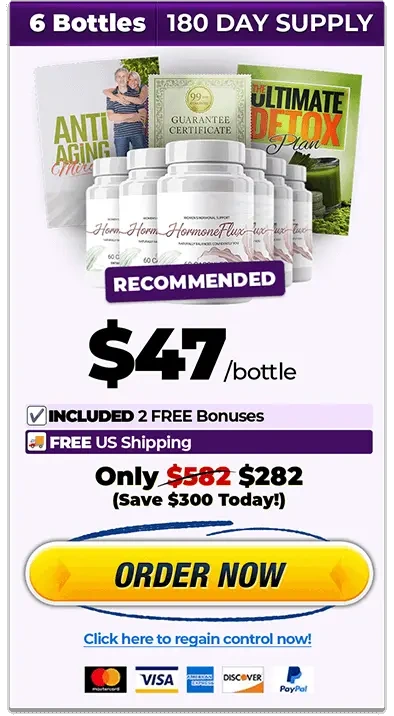
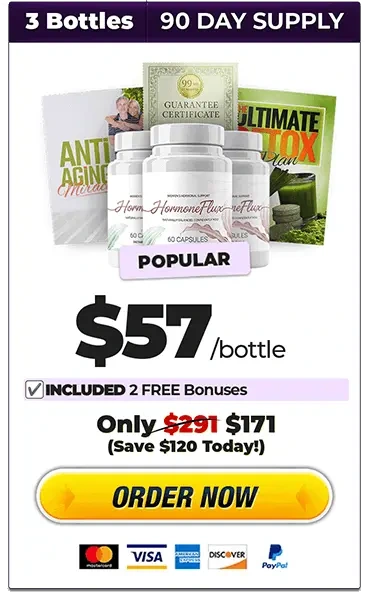
HormoneFlux publishes its full botanical panel — black cohosh, chasteberry, dong quai, red clover, maca and ashwagandha — in one daily vegetarian capsule, with no hidden proprietary blend. The three-bottle bundle is a popular starting point, with free U.S. shipping and a 90-day guarantee.
See the exact dose in HormoneFlux — from $49/bottleWhat quality markers separate a good menopause supplement from a bad one?
The quality markers that matter most in a menopause supplement are a full-disclosure ingredient panel, manufacturing in a GMP-registered facility, sensible amounts of each botanical, and plain, honest language about what the product can and cannot do. These four together tell you far more than any front-of-bottle slogan. A brand that gets all four right is signalling that it expects to be checked, which is exactly the posture you want from something you will take every day. The checklist below turns these into questions you can answer in the store or on a product page.
| Quality marker | What to check | Why it matters |
|---|---|---|
| Full-disclosure panel | Every ingredient shows its amount | You can judge the formula, not the marketing. |
| GMP-registered facility | Stated on the label or site | Signals consistent manufacturing standards. |
| Sensible amounts | Botanicals in everyday, precedented ranges | Neither underdosed nor reckless megadoses. |
| Honest language | Traditional-use wording, no cure claims | Shows the brand respects the evidence. |
| Guarantee & support | Refund window and real contact details | Lets you try it with limited downside. |
Check today’s HormoneFlux pricing →

How does HormoneFlux measure up as a menopause supplement?
HormoneFlux measures up as a menopause supplement by scoring on every quality marker above: it lists each botanical on a full-disclosure panel, is made in the USA in a GMP-registered facility, uses its ingredients in everyday amounts, and describes them in traditional-use language rather than cure claims. In other words, it is built to be checked. The formula pairs the classic transition botanicals — black cohosh, chasteberry, dong quai and red clover — with maca and ashwagandha for the everyday energy-and-stress layer, all in a single once-daily vegetarian capsule.
None of that makes it a treatment, and the brand does not pretend otherwise. What it does mean is that HormoneFlux is easy to evaluate on its merits: you can see exactly what you are taking, how much, and why each botanical is there. That transparency is the whole point of a buyer’s guide — the goal is not to find a miracle, but to find a product honest enough to judge. You can read the complete breakdown in the full HormoneFlux review, or jump straight to the ingredients section to see the panel for yourself.
How should you use a menopause supplement safely?
A menopause supplement is used most safely by taking it daily at the label amount, giving it several weeks before judging, and looping in your doctor if you take medication or have a hormone-sensitive condition. For most healthy adults, well-formulated botanical blends are generally well tolerated, with the most common issues being mild and digestive. That said, none of these herbs is right for everyone. Black cohosh warrants caution with liver concerns; phytoestrogen botanicals like red clover deserve a conversation with your doctor if you have a hormone-sensitive history; and no menopause supplement is recommended during pregnancy or breastfeeding. The professional guidance on this is The North American Menopause Society, The 2023 nonhormone therapy position statement of The North American Menopause Society, Menopause (2023).
The sensible routine is the same one that applies to any thoughtful supplement: choose a transparent product, keep to the label, be patient, and treat it as one part of a broader approach that includes sleep, movement and diet. For that wider picture, see our primer on how to support hormone balance naturally. Because HormoneFlux delivers its botanicals in everyday quantities as one daily capsule, it is designed to slot into a simple routine rather than a complicated stack — but it is still general wellness support, not personal medical advice.
Frequently asked questions
What should you look for in a menopause supplement?
Look for named botanicals at meaningful amounts, a fully disclosed panel with no hidden proprietary blend, third-party or GMP-certified manufacturing, and honest, non-curative language. The best menopause supplements name each ingredient and its quantity so you can judge the formula rather than the marketing. HormoneFlux is one example of a transparent, fully labelled botanical blend.
What are the best ingredients in menopause supplements?
The most established menopause supplement ingredients are black cohosh, red clover isoflavones, chasteberry, dong quai, and supportive adaptogens like maca and ashwagandha. Black cohosh and soy or red clover isoflavones have the most research behind them for menopausal comfort, though results are mixed. HormoneFlux combines several of these traditional botanicals in one daily capsule.
Do menopause supplements actually work?
Menopause supplements have a real but still-developing evidence base: some botanicals show modest benefits in trials while others are inconclusive, and effects vary widely from woman to woman. They are best seen as gentle daily support rather than a treatment or a replacement for hormone therapy. Give a quality blend several weeks and track how you feel.
What are the red flags in a menopause supplement?
Red flags include hidden proprietary blends that do not disclose amounts, disease or cure claims, fabricated doctor endorsements, miracle timelines, and no manufacturing or quality information. If a label promises to cure hot flashes or reverse menopause, treat that as a warning sign. A trustworthy menopause supplement is transparent about what is inside and honest about what it cannot do.
Is HormoneFlux a good menopause supplement?
HormoneFlux is a fully disclosed, once-daily botanical blend that combines black cohosh, chasteberry, dong quai, red clover, maca and ashwagandha in a vegetarian capsule made in a GMP-registered facility. It is designed as everyday support for the menopausal transition rather than a treatment, and every ingredient is named on the panel. Whether it suits you depends on your goals, so read the label and ask your doctor.
Are menopause supplements safe to take daily?
For most healthy adults, well-formulated menopause supplements are generally well tolerated when taken daily at label amounts, with occasional mild digestive upset. They are not recommended during pregnancy or breastfeeding, and anyone on medication, with a hormone-sensitive condition, or with liver concerns should speak with a doctor before starting. This is general information, not medical advice.
Try HormoneFlux risk-free for 90 days →
HormoneFlux is a dietary supplement, not a treatment for any medical condition. These statements have not been evaluated by the Food and Drug Administration. This product is not intended to diagnose, treat, cure or prevent any disease. Always consult a qualified healthcare professional about your individual needs.
References & further reading
- National Center for Complementary and Integrative Health (NCCIH). Menopausal Symptoms and Complementary Health Approaches. nccih.nih.gov/health/menopausal-symptoms-in-depth
- National Center for Complementary and Integrative Health (NCCIH). Black Cohosh. nccih.nih.gov/health/black-cohosh
- Mayo Clinic. Menopause — Diagnosis & treatment. mayoclinic.org/diseases-conditions/menopause
- Examine.com. Menopause supplements — ingredient evidence. examine.com/conditions/menopause
- Sadahiro R et al. Black cohosh extracts in women with menopausal symptoms: an updated pairwise meta-analysis. Menopause, 2023. pubmed.ncbi.nlm.nih.gov/37192826
- Office of Dietary Supplements, NIH. Dietary Supplements: What You Need to Know. ods.od.nih.gov/factsheets/WYNTK-Consumer
- Franco OH et al. Use of Plant-Based Therapies and Menopausal Symptoms: A Systematic Review and Meta-analysis. JAMA, 2016. pubmed.ncbi.nlm.nih.gov/27327802
- The North American Menopause Society The 2023 nonhormone therapy position statement of The North American Menopause Society. Menopause, 2023. pubmed.ncbi.nlm.nih.gov/37252752
These references describe the ingredients and their traditional use in general terms and do not constitute evidence that any product treats, cures or prevents any condition.
Keep reading: black cohosh for hot flashes · red clover isoflavones · perimenopause vs menopause · back to the HormoneFlux blog · homepage.