Black Cohosh vs Red Clover: How HormoneFlux Uses Both

Updated September 2026 · reviewed by the HormoneFlux Research Team. We are an independent information resource, not a medical provider; this article is educational, not medical advice.
Black cohosh vs red clover is the comparison of two menopause botanicals that work in different ways: black cohosh is the most-recognised single herb for hot-flash comfort and is not a phytoestrogen, while red clover supplies isoflavones, plant compounds structurally similar to oestrogen. Both are traditional supports with mixed formal evidence, which is exactly why HormoneFlux includes both rather than forcing a choice. This guide compares how each is used, where they differ, and why pairing them is the sensible design.
Black cohosh or red clover for menopause — the honest short version.
- The short version
- Neither is clearly “better”; they act differently, so many blends use both. Treat each as traditional support.
- Black cohosh
- Actaea racemosa root — the classic menopause herb; mechanism debated and probably not oestrogen-like.
- Red clover
- Trifolium pratense — a source of isoflavones (biochanin A, formononetin), which are phytoestrogens.
- Better together?
- Different chemistry means they complement rather than duplicate — the logic behind including both in HormoneFlux.
- Safety
- Generally well tolerated; hormone-sensitive conditions, pregnancy, nursing or medication warrant a doctor first.
Ask which single herb is best for menopause and two names dominate: black cohosh and red clover. They are constantly pitted against each other online, yet they are not really rivals — they come from different plant families and work through different routes. Below we set them side by side and explain why HormoneFlux carries both.

What is the difference between black cohosh and red clover?
The core difference between black cohosh and red clover is chemical: red clover is a phytoestrogen source and black cohosh is not. Red clover’s flowers are rich in isoflavones — plant compounds shaped somewhat like the body’s own oestrogen — while black cohosh’s root works through a still-debated, generally non-oestrogenic mechanism. That distinction shapes who each herb suits, what the research examines, and the cautions attached to each.
How is black cohosh traditionally used?
Black cohosh is traditionally used for the flushing and night-sweat sensations of the menopausal transition, and it is the most recognisable name in the category. Native to North American woodlands and long used by Indigenous communities, Actaea racemosa (formerly Cimicifuga racemosa) delivers its active fraction from the root and rhizome. It is not an oestrogen and not hormone therapy, part of why it appeals as a non-hormonal option. Our piece on black cohosh for hot flashes goes deeper.
How is red clover traditionally used?
Red clover is traditionally used as a source of isoflavones for general menopausal ease, particularly by women drawn to a phytoestrogen approach. Trifolium pratense is the same pink-flowered legume seen in meadows, and its blossoms concentrate isoflavones such as biochanin A and formononetin. Because these interact weakly with oestrogen receptors, red clover is often discussed alongside soy as a plant-based complement to the diet. Our red clover isoflavones guide covers it in full.
Red clover isoflavones vs black cohosh: how do they work?
Red clover isoflavones vs black cohosh comes down to two different proposed mechanisms, not two versions of one. Red clover’s isoflavones are phytoestrogens that may bind weakly to oestrogen receptors; black cohosh’s action is unresolved, with current thinking leaning away from an oestrogen-like effect. This is why comparing them ingredient-for-ingredient can mislead — they are not competing to do the same job. The pooled trial evidence behind that sits in Lethaby A et al., Phytoestrogens for menopausal vasomotor symptoms, Cochrane Database of Systematic Reviews (2013).
| Feature | Black cohosh | Red clover |
|---|---|---|
| Botanical name | Actaea racemosa | Trifolium pratense |
| Part used | Root & rhizome | Flower (blossom) |
| Key compounds | Triterpene glycosides | Isoflavones (biochanin A, formononetin) |
| Phytoestrogen? | No — mechanism debated | Yes — isoflavones are phytoestrogens |
| Most associated with | Hot-flash comfort | General isoflavone support |
| Traditional-use footing | Very long, well known | Long, tied to isoflavone interest |
Black cohosh or red clover for menopause: which should you choose?
For most women, black cohosh or red clover for menopause is not an either/or decision, because the two herbs answer different questions. If your interest is the best-known herb for the flushing and night-sweat cluster, black cohosh is the traditional first name. If you are drawn to a plant-based isoflavone approach, red clover is the more direct fit. Neither is proven, so the choice is about which angle appeals to you.
The practical wrinkle is that most women do not want to run two bottles, time two doses, and guess how the amounts stack up. That is where a considered blend earns its place: it delivers a sensible amount of each in one capsule. For the bigger picture, our primer on how to support hormone balance naturally sets both herbs against diet, sleep and daily habits.

What does the research say about black cohosh and red clover?
The research on both black cohosh and red clover is genuine but mixed, which is the most important thing to understand before choosing. For black cohosh, the U.S. National Center for Complementary and Integrative Health (NCCIH) notes it is among the most popular menopause herbs while stressing that trial results are inconsistent. For red clover isoflavones, reviews likewise report modest and inconsistent findings, with study quality and product variability making firm conclusions difficult. The pooled trial evidence behind that sits in Sadahiro R et al., Black cohosh extracts in women with menopausal symptoms: an updated pairwise meta-analysis, Menopause (2023).
This is the honest, evidence-led picture HormoneFlux stands behind. Neither herb carries settled proof that would let anyone promise a result. What both have is a long tradition of use and a real research signal — enough to justify a place in a thoughtful blend, not enough to crown a winner.

See the exact dose of both in HormoneFlux
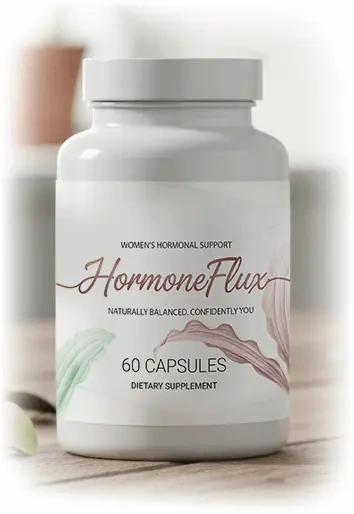
HormoneFlux carries standardised black cohosh root and red clover isoflavones together, in one daily vegetarian capsule. The six-bottle bundle is the best value at $49 per bottle, with free U.S. shipping and a 90-day guarantee.
See the exact dose in HormoneFlux — from $49/bottleWhat is the best menopause herb — or is one not enough?
There is no single best menopause herb, and the search for one is part of why blends exist. Because black cohosh and red clover act through different mechanisms and each has only mixed single-ingredient evidence, betting everything on one means accepting that herb’s uncertainty. Pairing two differently-acting botanicals spreads the bet. The table below shows how each is used within a blend.
| Consideration | Black cohosh | Red clover |
|---|---|---|
| Common form | Standardised root/rhizome extract | Standardised isoflavone extract |
| Typical daily range (studied) | ~20–40 mg extract | ~40–80 mg isoflavones |
| Time before judging fit | 8–12 weeks | 8–12 weeks |
| Key caution | Rare liver reports; ask a doctor if on meds | Phytoestrogen — ask a doctor if hormone-sensitive |
| Role in HormoneFlux | Anchor for menopausal comfort | Isoflavone contribution |
Check today’s HormoneFlux pricing →
Are black cohosh and red clover safe to take together?
Black cohosh and red clover are commonly combined in women’s menopause formulas and are generally well tolerated at the amounts used in supplements. Even so, the cautions differ by herb. Black cohosh is not recommended in pregnancy or nursing, and rare reports of liver concerns mean anyone with liver problems or on medication should ask a doctor first. Red clover, as a phytoestrogen, warrants a doctor’s input for anyone with a history of hormone-sensitive conditions. This is general information, not medical advice. A systematic summary of that work is Kanadys W et al., Evaluation of Clinical Meaningfulness of Red Clover (Trifolium pratense L.) Extract to Relieve Hot Flushes and Menopausal Symptoms in Peri- and Post-Menopausal Women: A Systematic Review and Meta-Analysis of Randomized Controlled Trials, Nutrients (2021).
Because both are traditional supports rather than treatments, the sensible frame is the same: use a quality standardised product, keep to the label, give it time, and loop in your doctor if you have a diagnosed condition or take prescription medicine. A blend does not remove these cautions — it means one label instead of two.
Why does HormoneFlux include both black cohosh and red clover?
HormoneFlux includes both black cohosh and red clover because they are complementary rather than redundant. Black cohosh anchors the formula as the classic menopause herb for general comfort, while red clover adds isoflavones from a separate chemical family — a phytoestrogen angle black cohosh does not provide. Around this pair, HormoneFlux adds chasteberry, dong quai, wild yam, maca and sage, so the formula reaches across the whole transition.
That design answers the limitation running through this comparison: if each herb’s single-ingredient evidence is mixed, a considered blend lets each contribute its traditional strength within sensible amounts. See the complete panel in the HormoneFlux ingredients section, or read the full HormoneFlux review.

Frequently asked questions
Is black cohosh or red clover better for menopause?
Neither is clearly better; they are different tools. Black cohosh is the most-recognised single herb for hot-flash comfort and is not a phytoestrogen, while red clover supplies isoflavones. Research on both is mixed, so many formulas, including HormoneFlux, include both rather than forcing a choice.
What is the difference between red clover isoflavones and black cohosh?
Red clover's key compounds are isoflavones such as biochanin A and formononetin, which belong to the phytoestrogen family and can weakly interact with oestrogen receptors. Black cohosh works through a still-debated mechanism that current thinking suggests is not oestrogen-like. So the two herbs are chemically distinct and are thought to act on the body in different ways.
Can you take black cohosh and red clover together?
Black cohosh and red clover are frequently combined in women's menopause blends, and HormoneFlux includes both within everyday, well-precedented amounts. Because both are traditional supports rather than proven treatments, anyone who is pregnant, nursing, on medication, or has a hormone-sensitive condition or liver problems should speak with a doctor before combining them.
Do red clover isoflavones act like oestrogen?
Red clover isoflavones are phytoestrogens, meaning they are plant compounds shaped somewhat like the body's own oestrogen and able to interact weakly with oestrogen receptors. This is not the same as taking a hormone, and the effect is far milder. Women with a history of hormone-sensitive conditions should discuss red clover with their doctor first.
Which works faster, black cohosh or red clover?
Neither is a fast-acting remedy. Both are traditionally taken daily for several weeks, often eight to twelve, before any impression of fit is formed. Consistency at a moderate dose matters more with either herb than a large single dose, which is why they suit a once-daily routine.
Why does HormoneFlux include both black cohosh and red clover?
HormoneFlux includes both because they are complementary rather than redundant: black cohosh anchors the blend for general menopausal comfort while red clover contributes isoflavones from a different chemical family. Pairing two differently-acting botanicals, alongside chasteberry, dong quai and maca, is designed to support the whole transition rather than betting on one herb.
Try HormoneFlux risk-free for 90 days →
HormoneFlux is a dietary supplement, not a treatment for any medical condition. These statements have not been evaluated by the Food and Drug Administration. This product is not intended to diagnose, treat, cure or prevent any disease. Always consult a qualified healthcare professional about your individual needs.
References & further reading
- National Center for Complementary and Integrative Health (NCCIH). Black Cohosh. nccih.nih.gov/health/black-cohosh
- National Center for Complementary and Integrative Health (NCCIH). Red Clover. nccih.nih.gov/health/red-clover
- NCCIH. Menopausal Symptoms and Complementary Health Approaches. nccih.nih.gov/health/menopausal-symptoms-in-depth
- Examine.com. Red Clover (Trifolium pratense). examine.com/supplements/red-clover
- Lethaby A et al. Phytoestrogens for menopausal vasomotor symptoms. Cochrane Database of Systematic Reviews, 2013. pubmed.ncbi.nlm.nih.gov/24323914
- Mayo Clinic. Menopause — Diagnosis & treatment. mayoclinic.org/diseases-conditions/menopause
- Sadahiro R et al. Black cohosh extracts in women with menopausal symptoms: an updated pairwise meta-analysis. Menopause, 2023. pubmed.ncbi.nlm.nih.gov/37192826
- Kanadys W et al. Evaluation of Clinical Meaningfulness of Red Clover (Trifolium pratense L.) Extract to Relieve Hot Flushes and Menopausal Symptoms in Peri- and Post-Menopausal Women: A Systematic Review and Meta-Analysis of Randomized Controlled Trials. Nutrients, 2021. pubmed.ncbi.nlm.nih.gov/33920485
These references describe the ingredients in general terms and are not evidence that any product treats, cures or prevents any condition.
Keep reading: red clover isoflavones explained · black cohosh for hot flashes · back to the HormoneFlux blog · homepage.